
Back to Top

Tech, Web, Cloud & Cabling Services

Category: News

World’s Largest Meat Supplier Attacked

The breach is the latest targeting of a crucial supply chain and comes three weeks after the Colonial Pipeline hack disrupted fuel operations in the U.S.

Here’s what we know:

What is JBS?
JBS USA is part of JBS Foods, one of the world’s largest food companies. It has operations in 15 countries and has customers in about 100 countries, according to its website. Its customers include supermarkets and fast food outlet McDonald’s and in the US, JBS processes nearly one quarter of the county’s beef and one-fifth of its pork. JBS’s five biggest beef plants are in the US, and the shutdowns have halted a fifth of meat production there, according to Bloomberg.

Its brands include Pilgrim’s, Great Southern and Aberdeen Black. The US headquarters is based in Greeley, Colorado, and it employs more than 66,000 people.

What happened?
Hackers attacked the company’s IT system last weekend, prompting shutdowns at company plants in North America and Australia. IT systems are essential in modern meat processing plants, with computers used at multiple stages including billing and shipping.
JBS hack shuttered nine US beef plants but normal operations to resume Wednesday
The hack, which the White House described Tuesday as ransomware, affected all of JBS’s US meatpacking facilities, according to an official at the United Food and Commercial Workers union that represents JBS employees. The cyberattack resulted in the closure of all nine of the company’s US beef plants, which are located in states including Arizona, Texas, Nebraska, Colorado, Wisconsin, Utah, Michigan and Pennsylvania, the union official said. The company said on Monday that it suspended all affected IT systems as soon as the attack was detected, and that its backup servers were not hacked.

The White House has said that the ransomware attack was likely carried out by a Russia-based criminal organization, and that it is dealing with the Russian government on the matter.
JBS’ operations in Australia were also affected. The Australian Meat Industry Council, a major trade group, said in a statement that “there is no indication whatsoever that this cyberattack will cause a major impact on Australian domestic red meat and pork products supply.”

What is ransomware?
In a ransomware attack, hackers steal an organization’s data and lock its computers. Victims must pay to regain access to their network and prevent the release of sensitive information.
Some sophisticated ransomware hackers, such as the Russian hacker group Darkside, sell their ransomware technology and take a cut of any ransoms paid to their customers.

Experts generally encourage ransomware victims not to pay any ransom. But a company’s ability to get back online without paying hackers may depend on whether it has protected backups of its data. In some cases, hackers can delete their target’s backups before locking its files, leaving the victim organization with no recourse.

JBS did not comment to CNN about details of the ransomware attack, including whether it paid the ransom.

This kind of cyberattack sounds familiar. Where have I heard that?
The hack comes a few weeks after a ransomware attack targeted Colonial Pipeline, which forced a six-day shutdown of one of the United States’ largest fuel pipelines. That May attack resulted in gas shortages, spiking prices and consumer panic. Colonial Pipeline has confirmed it paid a $4.4m (£3.1m) ransom to the cyber-criminal gang responsible.

Similar to JBS, Colonial Pipeline’s systems were hit with ransomware. Once a company has been hit by ransomware, its first course of action is usually to take much or all of its systems offline to isolate the hackers’ access and make sure they can’t move into other parts of the network.
That may be among the reasons why JBS shut down its operations and Colonial shut down its pipeline — to disconnect the companies’ operations from the IT systems that hackers breached. People briefed on the Colonial attack have said that the company halted operations because its billing system was also compromised and feared they wouldn’t be able to determine how much to bill customers for fuel they received.
The pipeline has since returned to normal operations.

Don’t be the next victim of a ransomware attack. Contact South Jersey Techies to discuss how your critical information can be secure.

If you have any questions, please call us at (856) 745-9990.


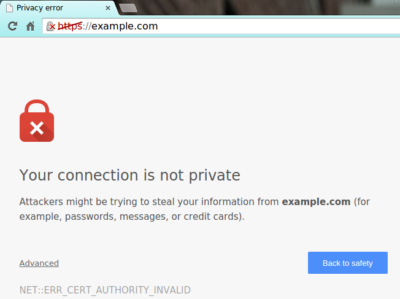
Chrome Labels HTTP Sites ‘Not Secure

Google sends a nudge toward the unencrypted web

Starting in July, Google Chrome marked all HTTP sites as “not secure,” according to a blog post published today by Chrome security product manager Emily Schechter. Chrome currently displays a neutral information icon, but starting with version 68, the browser is warning users with an extra notification in the address bar. Chrome currently marks HTTPS-encrypted sites with a green lock icon and “Secure” sign.

Google has been nudging users away from unencrypted sites for years, but this is the most forceful nudge yet. Google search began down-ranking unencrypted sites in 2015, and the following year, the Chrome team instituted a similar warning for unencrypted password fields.

The Chrome team said the announcement was mostly brought on by increased HTTPS adoption. Eighty-one of the top 100 sites on the web default to HTTPS, and a strong majority of Chrome traffic is already encrypted. “Based on the awesome rate that sites have been migrating to HTTPS and the strong trajectory through this year,” Schechter said, “we think that in July the balance was tipped enough so that we can mark all HTTP sites.”

HTTPS encryption protects the channel between your browser and the website you’re visiting, ensuring no one in the middle can tamper with the traffic or spy on what you’re doing. Without that encryption, someone with access to your router or ISP could intercept information sent to websites or inject malware into otherwise legitimate pages.

HTTPS has also become much easier to implement through automated services like Let’s Encrypt, giving sites even less of an excuse not to adopt it. As part of the same post, Google pointed to its own Lighthouse tool, which includes tools for migrating a website to HTTPS.


Beware downloading some apps or risk

Popular apps on your smartphone can be convenient and fun, but some also carry malicious software known as malware, which gives hackers easy access to your personal information.

A security firm found that between 75 and 80 percent of the top free apps onAndroid phones or iPhones were breached. The number jumps as high as 97 percent among the top paid apps on those devices.

Whether these apps help advertisers target you or help hackers rip you off, you’ll want to do your homework before downloading apps, reports CBS News correspondent Anna Werner.

California’s Susan Harvey said she was a victim after she used a debit card to download a slot machine game app to her cell phone through a Google Play store account.

“It was something you purchased once, for like $15,” Harvey said.

When she went to reload the game, she found hundreds of purchases had been made — by her math, more than $5,000 worth of transactions.

“My heart sank, I just sat there looking at it… I physically, I was sick, because I didn’t know what they were,” Harvey said.

That story’s no surprise to cybersecurity expert Gary Miliefsky, whose company SnoopWall tracks malware. He said certain apps are designed to steal your personal information.

“What are the consequences for me as a consumer?” Werner asked.

“You’re gonna lose your identity. You’re gonna wonder why there was a transaction. You’re gonna wonder how someone got into your bank account and paid a bill that doesn’t exist,” Miliefsky said.

Milifesky said when you download an app, you also give permission for it to access other parts of your phone, like an alarm clock app that can also track phone calls.

“You think an alarm clock needs all those permissions? Access to the Internet over wifi, your call information, calls you’ve made, call history, your device ID? This to me is not a safe alarm clock,” Miliefsky said.

And there’s the weather and flashlight apps that he says exploit legitimate banking apps to capture information, as he showed us in a demonstration of what could happen when someone takes a photo of a check to send to their bank.

“The flashlight app spies on the camera and noticed the check and grabbed a copy of it. Shipped it off to a server somewhere far away,” Miliefsky said.

Last year the group FireEye discovered 11 malware apps being used on iPhones that gathered users’ sensitive information and send it to a remote server, including text messages, Skype calls, contacts and photos Apple fought back by removing the apps and putting stricter security measures in place.

“They get at your GPS, your contacts list…to build a profile on you,” Miliefsky said.

Some apps are simply collecting information for advertising purposes. In 2014, the Federal Trade Commission settled a lawsuit with a company over its popular Brightest Flashlight app, alleging it transmitted consumers’ personal information to third parties without telling them.

But Miliefsky said he’s found another flashlight app that can do much more troubling things.

“This one turns on your microphone in the background, listens in on you, and sends an encrypted tunnel to a server we discovered in Beijing,” Miliefsky described.

“You’re saying that they’re actually listening to people’s conversations and sending that audio back to Beijing?” Werner asked.

“Yeah, we’ve tracked it. I can show you where it does it,” he said.

Miliefsky said it can be traced to a few blocks from Tiananmen Square on Information Drive in Beijing.

He gave a report on that app to the FBI.

“Because to me, it’s spyware at the nth degree,” Miliefsky said.

His recommendation?

“We really have to look at our phone and say, ‘This is really a personal computer that fits in our pocket. Let’s shut down all the apps we don’t use. Let’s delete apps that don’t make sense and reduce the risk of being spied on,'” Miliefsky said.

The creator of the Brightest Flashlight app settled with the FTC, agreeing to change its policy and delete all the information it had gathered.

Harvey sued Google over her alleged hack, but a judge recently dismissed it, saying she and her attorney filed too late. Google said fewer than one percent of Android devices got bad apps in 2014.

Have questions?

Get answers from Microsofts Cloud Solutions Partner!
Call us at: 856-745-9990 or visit: https://southjerseytechies.net/

South Jersey Techies, LL C is a full Managed Web and Technology Services Company providing IT Services, Website Design ServicesServer SupportNetwork ConsultingInternet PhonesCloud Solutions Provider and much more. Contact for More Information.

To read this article in its entirety click here.

Critical iPhone Spyware Fix Released

Apple has updated its software for iPhones to address a critical vulnerability that independent researchers say has been exploited by notorious surveillance software to spy on a Saudi activist.

Researchers from the University of Toronto’s Citizen Lab said the software exploit has been in use since February and has been used to deploy Pegasus, the spyware made by Israeli firm NSO Group that has allegedly been used to surveil journalists and human rights advocates in multiple countries.

The urgent update that Apple (AAPL) released Monday plugs a hole in the iMessage software that allowed hackers to infiltrate a user’s phone without the user clicking on any links, according to Citizen Lab. The Saudi activist chose to remain anonymous, Citizen Lab said.

Apple credited the Citizen Lab researchers for finding the vulnerability.

“Attacks like the ones described are highly sophisticated, cost millions of dollars to develop, often have a short shelf life, and are used to target specific individuals,” Ivan Krsti?, head of Apple Security Engineering and Architecture, said in a statement.

Krsti? said Apple rapidly addressed the issue with a software fix and that the vulnerability is “not a threat to the overwhelming majority of our users.”

Still, security experts encouraged users to update their mobile devices for protection.

In a statement, NSO Group did not address the allegations, only saying, “NSO Group will continue to provide intelligence and law enforcement agencies around the world with life saving technologies to fight terror and crime.”

The firm has previously said its software is only sold to vetted customers for counterterrorism and law enforcement purposes.

Researchers, however, say they have found multiple cases in which the spyware was deployed on dissidents or journalists. In 2019, Citizen Lab analysts alleged that Pegasus was used on the mobile phone of the wife of a slain Mexican journalist.

In a lawsuit filed in 2019, Facebook accused NSO Group of being complicit in a hack of 1,400 mobile devices using WhatsApp. (NSO Group disputed the allegations at the time.)

The proliferation of easy-to-use mobile hacking tools has given governments around the world a new and stealthy means of targeting adversaries. Sophisticated spyware made by NSO Group and other vendors has been reportedly used from Uzbekistan to Morocco.

The surge in spyware prompted a United Nations panel of human rights experts in August to call for a moratorium on the sale of such surveillance tools. The UN panel said the ban should remain in place until governments have “put in place robust regulations that guarantee its use in compliance with international human rights standards.”

Apple’s Red iPhone 7 Supports Charity

iPhone SE gets a storage boost, too.

Apple just made upgrading to an iPhone 7 a philanthropic decision by adding a red special edition to the lineup. The new red aluminum finish, which is available to order for both iPhone 7 and 7 Plus in-store and online on March 24, is a fundraising effort for the Global Fund. Apple will contribute a portion of red iPhone sales to the fight against AIDS and HIV.

The two new red iPhones will come in 128GB and 256GB storage variations and start at $749 in the U.S. Apple will sell the special editions in more than 40 countries by the end of March, with Brazil, Chile, Colombia, India, and Turkey to come in April. If you live in the U.S., U.K., or China and are part of the iPhone Upgrade Program, you’ll be able to snag an unlocked red iPhone with AppleCare+. In the U.S., the 128GB iPhone 7 will start at $37 a month with the ability to upgrade every year.

Apple has a long-standing relationship with the Global Fund and has a variety of products in its red lineup, including iPod’s, cases, headphones, and speakers. Last December, Apple celebrated its decade-long partnership with the Global Fund by donating proceeds from in-app purchases, exclusive downloads, and newly launched accessories to the nonprofit. The company has so far donated more than $130 million to the Global Fund, making it the organizations’s largest corporate donor.

You can snag a flashy new red iPhone 7 on March 24, starting at $749.

iPhone SE gets a bump, too

Apple hasn’t forgotten about the littlest phone in its lineup, the iPhone SE. The company just doubled the 4-inch phone’s storage to 32GB and 128GB, up from 16GB and 64GB. Those models will be phased out and the roomier new options will start at $399 beginning March 24.

While the flashy new color and iPhone SE upgrade aren’t the biggest iPhone news of the year—that will come in September with the 10th anniversary iPhone 8—it’s nice to see Apple add a little something extra to both its existing flagship and its entry-level phones.

Have questions?

Get answers from Microsofts Cloud Solutions Partner!
Call us at: 856-745-9990 or visit: https://southjerseytechies.net/

South Jersey Techies, LL C is a full Managed Web and Technology Services Company providing IT Services, Website Design ServicesServer SupportNetwork ConsultingInternet PhonesCloud Solutions Provider and much more. Contact for More Information.

To read this article in its entirety click here.
Tim Cook: FBI Wanted iOS Backdoor

The most important Tech Case in a Decade

Customer Letter – Apple

February 16, 2016

A Message to Our Customers

The United States government has demanded that Apple take an unprecedented step which threatens the security of our customers. We oppose this order, which has implications far beyond the legal case at hand.

This moment calls for public discussion, and we want our customers and people around the country to understand what is at stake.

Answers to your questions about privacy and security

The Need for Encryption

Smartphones, led by iPhone, have become an essential part of our lives. People use them to store an incredible amount of personal information, from our private conversations to our photos, our music, our notes, our calendars and contacts, our financial information and health data, even where we have been and where we are going.

All that information needs to be protected from hackers and criminals who want to access it, steal it, and use it without our knowledge or permission. Customers expect Apple and other technology companies to do everything in our power to protect their personal information, and at Apple we are deeply committed to safeguarding their data.

Compromising the security of our personal information can ultimately put our personal safety at risk. That is why encryption has become so important to all of us.

For many years, we have used encryption to protect our customers’ personal data because we believe it’s the only way to keep their information safe. We have even put that data out of our own reach, because we believe the contents of your iPhone are none of our business.

The San Bernardino Case

We were shocked and outraged by the deadly act of terrorism in San Bernardino last December. We mourn the loss of life and want justice for all those whose lives were affected. The FBI asked us for help in the days following the attack, and we have worked hard to support the government’s efforts to solve this horrible crime. We have no sympathy for terrorists.

When the FBI has requested data that’s in our possession, we have provided it. Apple complies with valid subpoenas and search warrants, as we have in the San Bernardino case. We have also made Apple engineers available to advise the FBI, and we’ve offered our best ideas on a number of investigative options at their disposal.

We have great respect for the professionals at the FBI, and we believe their intentions are good. Up to this point, we have done everything that is both within our power and within the law to help them. But now the U.S. government has asked us for something we simply do not have, and something we consider too dangerous to create. They have asked us to build a backdoor to the iPhone.

Specifically, the FBI wants us to make a new version of the iPhone operating system, circumventing several important security features, and install it on an iPhone recovered during the investigation. In the wrong hands, this software — which does not exist today — would have the potential to unlock any iPhone in someone’s physical possession.

The FBI may use different words to describe this tool, but make no mistake: Building a version of iOS that bypasses security in this way would undeniably create a backdoor. And while the government may argue that its use would be limited to this case, there is no way to guarantee such control.

The Threat to Data Security

Some would argue that building a backdoor for just one iPhone is a simple, clean-cut solution. But it ignores both the basics of digital security and the significance of what the government is demanding in this case.

In today’s digital world, the “key” to an encrypted system is a piece of information that unlocks the data, and it is only as secure as the protections around it. Once the information is known, or a way to bypass the code is revealed, the encryption can be defeated by anyone with that knowledge.

The government suggests this tool could only be used once, on one phone. But that’s simply not true. Once created, the technique could be used over and over again, on any number of devices. In the physical world, it would be the equivalent of a master key, capable of opening hundreds of millions of locks — from restaurants and banks to stores and homes. No reasonable person would find that acceptable.

The government is asking Apple to hack our own users and undermine decades of security advancements that protect our customers — including tens of millions of American citizens — from sophisticated hackers and cybercriminals. The same engineers who built strong encryption into the iPhone to protect our users would, ironically, be ordered to weaken those protections and make our users less safe.

We can find no precedent for an American company being forced to expose its customers to a greater risk of attack. For years, cryptologists and national security experts have been warning against weakening encryption. Doing so would hurt only the well-meaning and law-abiding citizens who rely on companies like Apple to protect their data. Criminals and bad actors will still encrypt, using tools that are readily available to them.

A Dangerous Precedent

Rather than asking for legislative action through Congress, the FBI is proposing an unprecedented use of the All Writs Act of 1789 to justify an expansion of its authority.

The government would have us remove security features and add new capabilities to the operating system, allowing a passcode to be input electronically. This would make it easier to unlock an iPhone by “brute force,” trying thousands or millions of combinations with the speed of a modern computer.

The implications of the government’s demands are chilling. If the government can use the All Writs Act to make it easier to unlock your iPhone, it would have the power to reach into anyone’s device to capture their data. The government could extend this breach of privacy and demand that Apple build surveillance software to intercept your messages, access your health records or financial data, track your location, or even access your phone’s microphone or camera without your knowledge.

Opposing this order is not something we take lightly. We feel we must speak up in the face of what we see as an overreach by the U.S. government.

We are challenging the FBI’s demands with the deepest respect for American democracy and a love of our country. We believe it would be in the best interest of everyone to step back and consider the implications.

While we believe the FBI’s intentions are good, it would be wrong for the government to force us to build a backdoor into our products. And ultimately, we fear that this demand would undermine the very freedoms and liberty our government is meant to protect.

Tim Cook

Answers to your questions about privacy and security

Have questions?

Get answers from Microsofts Cloud Solutions Partner!
Call us at: 856-745-9990 or visit: https://southjerseytechies.net/

South Jersey Techies, LL C is a full Managed Web and Technology Services Company providing IT Services, Website Design ServicesServer SupportNetwork ConsultingInternet PhonesCloud Solutions Provider and much more. Contact for More Information.

To read this article in its entirety click here.

8 Ways iPhone 8 Beats Galaxy S8

The Galaxy S8 might be the best phone of 2017, but the year’s not over until the next iPhone makes its debut. Here’s how Apple can take the crown back from Samsung.

If there wasn’t already a mountain of pressure on Apple to deliver something spectacular with this year’s iPhone update, there surely is now. If you haven’t noticed, Samsung has released the Galaxy S8 and S8+, and they’re pretty remarkable. As a former iPhone 7 Plus user, the S8+ might very well be the best phone I’ve ever used, with a stunning screen, speedy processor, and, yes, a gorgeous design.

But what makes the S8 so amazing is how unique it is. For the first time in a while, Samsung is standing alone on the cutting edge with a phone that needs to be seen to be believed. From its barely there bezels to its brilliant wraparound screen, the Galaxy S8 truly gives Apple a run for its money. No joke, it actually makes the iPhone 7 look pretty stale.

But there’s still a lot of time between now and the release of the next iPhone. According to rumors, the lineup this year will consist of the usual S models along with a fantabulous iPhone 8, which looks to adopt a similar aesthetic to the Galaxy S8, with an edge-to-edge OLED display and the removal of the physical home button. But just because it might look similar doesn’t mean it can’t still be better. Here’s how Apple can still steal the crown from Samsung:

The Galaxy S8 has a killer camera but the iPhone 7 is no slouch.

Killer camera

The Galaxy S phones has always had a camera on par with the iPhone, so it was a little surprising that Samsung didn’t upgrade the S8’s all that much. The iPhone 7 Plus is already a step ahead here, with 2X optical zoom and the sublime Portrait Mode, but the iPhone 8 could really separate itself from the S8 by taking it even further. Along with a megapixel bump, Apple could add optical image stabilization to the second lens, which will go a long way toward increasing photo and zoom quality. But what would really set it apart would be a larger sensor and greater ISO range to make it a low-light leader.

The Gear VR is a big part of the S8, but AR could be the iPhone 8’s big play.

AR not VR

While Samsung is going all-in on virtual reality with the Galaxy Gear and the S8, rumors suggest that Apple is more interested in augmented reality. And that could be one of the features that sets the iPhone 8 apart. Smartphones have been slow to incorporate AR into the interface, but if Pokémon Go has taught us anything, it’s that people are way more interested in seeing the world through their screens than strapping a headset to their faces. An AR-fueled iPhone 8 could connect us to the world in fun new ways without separating us from reality.

The Galaxy S8’s fingerprint sensor is just in the worst place.

Well-placed fingerprint sensor

While the Galaxy S8 is one of the best smartphones ever made, one tragic flaw prevented it from being perfect: the placement of the fingerprint sensor. For some god-awful reason, Samsung put it right next to the camera, all but ensuring your finger will not only miss it, but also repeatedly smudge the lens. If the rumors are correct that Apple will also be removing the home button in the iPhone 8, it has two options: under the screen or on the back. A first-of-its-kind in-panel sensor would be revolutionary, but if it’s on the back, Apple needs to learn from Samsung’s mistake and put it lower, like on the Pixel.

Bixby hasn’t exactly exploded out of the gate, but it does a lot that Siri doesn’t do.

Expanded Siri

When Samsung unveiled the S8, a major part of the presentation was spent introducing its new AI assistant, Bixby. However, the new service wasn’t just a competitor to Siri, Alexa, and Google Assistant. Samsung integrated Bixby deep into the interface to let it access apps, fetch information, and cut down on how often we need to touch our phones. It’s a cool idea, except the only problem is it doesn’t really work. If Apple could do something similar with Siri and expand its reach to work inside apps while we’re using them, it could beat Bixby at its own game.

The Galaxy S8’s screen is pretty, but It also uses its software to accentuate it.

iOS 11

One of the biggest gripes people have had about Samsung’s phones has always been its TouchWiz interface. But that’s changed with the S8, as Samsung has crafted an intuitive, refined system that takes full advantage of its superb hardware. If Apple is going to release a radically redesigned iPhone with curved edges and a wraparound screen, the same old iOS isn’t going to do it justice. It might be time to rethink iOS for modern times and give it more than new features and a fresh coat of pixels.

Samsung’s wireless charging supports Qi and PMA standards, and the pad stands up or lies flat. But it’s not long range wireless.

True wireless charging

While Samsung has had wireless charging in the Galaxy S since the S6, Apple has been slow to adopt it for the iPhone. All signs indicate that’s going to change for the iPhone 8, but if Apple wants to top the Galaxy S8 and not just keep pace, it’s going to need something a little more exciting than a pretty charging pad. One of the rumors we’ve read suggests that Apple could adopt true long-range wireless charging for the next iPhone, which would power up the battery whenever you’re within range of the charger, even if it’s in your pocket. That alone would be an S8 killer.

The Galaxy S8 includes a pretty great pair of earbuds.

Bundled AirPods

Samsung didn’t just resist the trend to ditch the headphone jack on S8, it embraced the 3.5mm jack in a big way. Inside the S8 box is a pair of premium AKG-tuned earbuds that are a few steps above the usual build and sound quality you get for free—certainly better than what Apple gives us. But if Apple really wants to embrace the wireless future of the iPhone, it needs to stop including a wired set of EarPods, even if they are Lightning. A pair of AirPods in the box (or a cheaper Beats alternative) would really set it apart from the 3.5mm S8 and make a strong statement.

The battery life on the S8 is really good, but the iPhone 8’s could be even better.

Blow-away battery

Samsung has had its share of battery issues, but the S8 looks to put them in the past with a long-lasting battery that hopefully won’t blow up. But while it can get through the whole day for the most part, the S8 didn’t deliver the the real breakthrough we were hoping for. We’re still waiting for a phone that lets us completely forget about the battery until our day is over, and we’d love to see the iPhone 8 deliver something in the range of 12 hours and truly change the game.

Have questions?

Get answers from Microsofts Cloud Solutions Partner!
Call us at: 856-745-9990 or visit: https://southjerseytechies.net/

South Jersey Techies, LL C is a full Managed Web and Technology Services Company providing IT Services, Website Design ServicesServer SupportNetwork ConsultingInternet PhonesCloud Solutions Provider and much more. Contact for More Information.

To read this article in its entirety click here.

Coming Soon: 5G Explained

Just five years after the first 4G smartphone hit the market, the wireless industry is already preparing for 5G.

5G Wireless

Each of the four nationwide cell phone carriers, as well as smartphone chipmakers and the major network equipment companies are working on developing 5G network technology for their customers.

There are many significant hurdles that all the industry players have to clear before you’ll see a little 5G symbol next to the signal bars on your smartphone screen. For example, it has yet to be determined what 5G even means, let alone what it will look like and when it will get here.

But as consumers use up rapidly growing amounts of 4G bandwidth watching streaming videos on their phones, 5G will soon become a necessity. As telecom engineers work furiously to develop 5G technology, we’re getting a clearer picture of the who, what, where, when and why of 5G.

What is 5G?

5G

The “G” in 3G, 4G and 5G stands for “generation.” So 5G will be the fifth generation of wireless network technology.

The standards for 5G have not yet been set. According to Bill Smith, president of AT&T’s (T, Tech30)network operations, 5G will likely be defined in 2018, and the standards for 5G will codified sometime in 2019 by the standards-setting International Telecommunication Union, a branch of the United Nations. The standards will determine which wireless technologies can be called “5G,” as well as what its characteristics must include, such as how fast it will be.

Still, it’s possible to make a very educated guess about what 5G will look like based on the emerging 5G technologies that the wireless industry is experimenting with.

Here’s the elevator pitch: 5G will be faster, smarter and less power-hungry than 4G, enabling a slew of new wireless gadgets. 5G will let us have faster smartphones, more smart-home devices and longer-lasting wearable gizmos.

How fast will 5G be?

5G

5G has the potential to offer speeds up to 40 times faster than 4G — fast enough to stream “8K” video in 3-D or download a 3-D movie in about 6 seconds (on 4G, it would take 6 minutes).

Unfortunately for consumers, there’s a difference between lab experiments and reality. Peak speeds are fun to dream about, but in the real world, actual speeds are much slower than promised.

Nokia (NOK), one of the biggest 5G players, believes that its 5G technology will allow for real-world speeds of about 100 Megabits per second when the network is most congested — that’s about four times faster than 4G’s top speed.

Another characteristic of 5G is that it will have ultra-low latency, meaning that it could drastically reduce the amount of time it takes for the network to respond to your commands. That could give the appearance of much faster loading websites, apps, videos and messages.

How will it work?

A lot of the wireless companies’ 5G experimentation is taking place in super-high frequencies — as high as 73,000 MHz. Today’s cell phone networks broadcast signal in a range of 700 MHz to 3,500 MHz.

The advantage of high-frequency signals is that they’re capable of providing significantly faster data speeds. The disadvantage is that they travel much shorter distances and they can’t easily penetrate walls. That means thousands — perhaps even millions — of mini cell towers, or “small cells” would need to be placed on top of every lamp post, every building, inside every home and potentially every room.

That presents a host of problems. How can cell phone companies possibly process all that data? There are companies, such as Google’s recently acquired Alpental, that are working on those “backhaul” issues. But they’re not so close to a solution, according to Akshay Sharma, wireless infrastructure analyst at Gartner.

That’s why 5G might complement 4G, rather than outright replace it. In buildings and in crowded areas, 5G might provide a speed boost. But when you’re driving down the highway, 4G could be your only option — at least for a while.

When is 5G coming?

5G

None of these questions are going to be answered any time soon. The industry’s consensus is that it will run 5G experiments in South Korea during the 2018 Winter Olympics, with mass deployments beginning sometime in 2020.

Yet Verizon (VZ, Tech30) has said that it is working on 5G technology with the aim of bringing it to market much sooner — as early as 2017.

With all the questions surrounding 5G and all the wrinkles that need to be ironed out, it’s exceedingly unlikely that anything Verizon does will be widely deployed. For example, the smartphone makers will need to develop chips that are capable of sending and receiving 5G signal without driving costs significantly higher.

Have questions?

Get help from IT Experts/Microsofts Cloud Solutions Partner
Call us at: 856-745-9990 or visit: https://southjerseytechies.net/

South Jersey Techies, LLC is a full Managed Web and Technology Services Company providing IT Services, Website Design ServicesServer SupportNetwork ConsultingInternet PhonesCloud Solutions Provider and much more. Contact for More Information.

5 Ways to Prep for Hurricane Season

Hurricane season is from June 1 through November 30.  On October 29, 2012 the East Coast was hit with Hurricane Sandy.  Many businesses are still recovering and rebuilding from the largest Atlantic Hurricane on record.  Power outages, high winds and flooding affected many areas in New Jersey and New York.

The Small Business Administration and Agility Recovery hosted “Protect Your Business This Season” webinar.  

oct29_sat

Below are five steps to protect your business before a disaster like Hurricane Sandy:

Evaluate Risks

All types of risks exist such as environmental disasters, organized disruption, loss of service, equipment failure and many more.  Assess your company building for risks (inside and outside).  Also, assess business losses during and after a disaster strikes.

Calculate the cost of interruption

Calculating for  “post-disaster”  consists of many different scenarios.  Creating a plan for up to six months of interruptions for your company.  Another major concern is to design a backup plan with secondary vendors in case all primary vendors cannot provide their specific services. 

Insurance Coverage

Consult with your agent and an insurance expert when buying insurance for your business.  Insurance policies vary, it is important to design a policy that best fits your needs.

Create a communication plan

Gather primary and secondary e-mail addresses for all employees, contractors, vendors and customers to put an e-mail alert system in place.  Businesses could also use Social Media to alert public before and after a disaster.

Telework Policy

If a disaster strikes, employees may not have the ability to travel to the office.  Setting up a Telework Policy will grant employees access to work from home.  This policy can be for all employees or specific employees.  

Need help preparing for Hurricane season?

Contact us at 856-745-9990 or click here.


10 Ways Mobile Devices Are Changing Life

mobile devices

Mobile Devices

Humanity is evolving in many ways thanks to mobile devices. But are all the changes for the better?

I was raking leaves in my yard the other weekend when I observed a black SUV slowly idling down the street. I didn’t recognize the vehicle and it looked out of place as though the driver were confused about where to go… or possibly casing houses to rob (hey, I’m a crime writer by nature).

The car pulled up to me and the passenger window went down. An older gentleman politely inquired if I knew where a certain nearby street was located. I told him how to get there and he thanked me profusely then drove off.

That got me thinking that I hadn’t been asked for directions in years, since most people now rely on their mobile devices for maps and directions. I reflected that I wouldn’t have had the pleasant encounter with that grateful driver if he had been using a device to guide him, and that started a train of thought about how mobile devices are changing society. What has improved us, and what are we missing out on?

1. We always know how to get there

It’s great to throw out the paper maps and not have to call people to find out how to get anywhere, nor to be called when they’re coming to my house. All we need is the address and presto! We’re there.

But… we’re also missing out on the unique dialogue we only get from people who know their own neighborhoods. Google Maps won’t tell us that our turn is right after the red mailbox and that it’s a tricky one so slow down. It can also be vague when it directs us through confusing areas like rotaries or 5-way intersections. And as someone who used to get “Triptiks” from AAA, it was pretty cool not only having the entire route for a trip laid out for us by an expert (in a visual form), but to get some one-on-one advice from them such as the best time to travel through D.C. to avoid traffic (trick question, there is no “best time.”) Sure, you can look this up online… where ten different opinions will be available, requiring you to pick and choose the most plausible.

2. We can buy almost anything immediately

Mobile devices are commonly used for purchasing, and according to Adweek.com”smartphones and tablets will account for $1.6 billion in sales on Thanksgiving, Black Friday and Cyber Monday combined.” It’s great that we can buy stuff we’re interested in as we please.

But… this can pose a problem for compulsive shoppers or people who may be less than responsible for their actions (I’m thinking inebriated college students after 2 am). Obviously this is an issue that can impact anyone with low impulse control and mobile devices are simply the conduit for their problem, not the problem itself. But I’ve also found real-life clerks can be extremely helpful in providing advice – the paint guy at my local hardware store, for instance, knows more about paint than anyone I’ve met. Sure, online advice and reviews are available to help you figure out what to buy but the human touch from knowledgeable experts you can talk to in person can’t be replaced.

3. We’re always available

Whether through a phone call, text, email, social media or some other form of communication, we’re always at the beck and call of those we know so long as we have a mobile device with us. Sure, the devices have “mute” functions and off buttons, but the constant flow of input can make many people reluctant to use these options (or to rely on them for long), especially if our mobile devices are used for work or emergency contact from loved ones. In fact, if we contact someone on their cell and they don’t pick up it can be disappointing or irritating. That’s what they’re there for, right?

But… people who want to concentrate and remain focused on a single task at a time have to exert rigid discipline on themselves (and likely those in their inner circle) lest they wander from one interruption to the next, checking that Facebook message a friend just sent or seeing if their spouses replied to that text. It’s like trying to work in an office with the door open while a big party is going on outside in the hallway. I’ve found it’s best to either close the door and focus or knock off for the day (if possible) and officially attend the party; working halfway in between is a recipe for low productivity.

4. No more waiting for the 11 p.m. news

Nowadays if something significant happens (no, but the Kardashians aren’t remotely significant) we whip out our devices and see what’s afoot, whether it’s a weather emergency, a crisis, or some historic moment. Even if the website we’re visiting is overloaded or sluggish there are plenty of others available. It’s all part of our “need to know now” mindset, right?

But… needing to know now can detract from the present moment if the news isn’t exactly earth-shattering. If it’s just another interruption it’s one more thing that takes away from what we’re doing (or trying to get done). I can’t help but feel like many news stories are played up or overemphasized as part of a “Hey! Look over here!” distraction, whether to promote ads, news sources or some other ulterior motive. This only contributes to the short attention span which is becoming a real problem for many people.

5. We’re never bored

Our mobile devices can hold or connect to an endless amount of entertainment. Thanks to streaming audio, video, copious storage capacities and zippy processors, it’s possible to listen to music, watch movies, read e-books, browse the web, engage with others and play games in just a few taps. With this much variety nobody need ever be bored again, right?

But… I think it’s important for people to learn how to handle boredom. So many of us feel like the phrase “I have nothing to do” is something to be feared rather than embraced. I’ve been guilty of it as well, such as during car trips where I was driving while my family slept and I shut the radio off since I didn’t want to disturb them. Being bored is an opportunity to reflect, consider and plan: to revisit the past or map out the future. It can be healthy, not frightening. At the time I was immersed in the TV show “LOST” and used several hours going over all the clues, details and plot elements that had yet to be unraveled (as it turned out, I never got close to the actual story behind the island).

6. We never have to take chances

My wife and I went out the other week and during the course of our evening decided on the spur of the moment to get tickets for the WWII film “Fury.” I lined up tickets on my smartphone at a theater in the next town over – the only one that still had seats for the show – and we picked them up then entered the movie. Great that we didn’t have to just drive over and hope we could get lucky by scoring a pair of seats, right?

But… there is something to be said for just gambling and taking a shot at something without using what is the real-life equivalent of a “cheat code.” Sure, it’s better than getting to the theater to find all the seats sold out, but that would have opened up some other options: see another film? Go somewhere else nearby? View a later show? Don’t get me wrong – if my smartphone can help up my odds of doing something I really want, I’ll play that card, but it does detract from the unpredictability of life with its themes of give and take or wins and losses.

7. We don’t need to know all this useless trivia

Numerous others have discussed this as well: thanks to mobile devices there’s no need to know silly little things like which planet is the sixth one from the sun, who won the War of 1812, or how many digits are in Pi (hint: a lot). We can just look it up right away, so as to save our brains for something more important like what Kim Kardashian is up to (not to beat a dead horse).

But… this access to information also has the capacity to erode our own personal knowledge stores as well as critical thinking ability. If we offload all that data elsewhere and access it only as (or if) needed, we’ll miss out on a lot of interesting and useful things that will hamstring us if we don’t have our mobile devices. In essence, we’re delegating our brain’s skills to an artificial brain, which can’t reason or meaningfully apply its talents to improve our lives or activities – other than just spitting out the facts we ask for. Information is more valuable when applied to the appropriate contexts by a brain actually engaged with what’s happening.

8. We never have to disconnect from friends or family

Social media can truly be amazing. I use it to connect with family across the country whom I’m not able to see regularly. I have built and strengthened friendships with people in my town because of it. And I’ve kept in touch with people who have literally known me all my life; in the era before social media we would simply have fallen out of touch, eventually forgetting each other’s names and all past interactions.

But… stories are rampant about social media wrecking marriages, working relationships and familial ties. Used correctly by well-adjusted folks, it’s a way to bring people together. Used inappropriately by those with underlying issues, it’s a way for them to alienate others (political battles, anyone?) or lose focus on their face-to-face loved ones in favor of their online community. I’m not blaming mobile devices or social media; as with online shopping I’m pointing out that this concept can wind up causing harm to people who misuse it, or misuse others with it.

9. We don’t have to drop off film for processing

Anyone remember Fotomats? If so, you were probably a child of the 80’s. These were drive-thru film processing kiosks where you could drop off your photo film and pick up the processed photos a day later. I haven’t seen one of these in years, and while it’s certainly true that photo film still exists and can be processed at other stores, this is usually done by professional photographers or photography enthusiasts. I’ve been using digital cameras and my smartphone for years now to take pictures; they’re easy to store on my hard drive, they are backed up automatically on my phone, and I can see how the shots turned out instantly.

But… there was something nice about dropping film off knowing it would be ready the next day (unlike in today’s instant gratification society, where we get impatient if something’s not immediately available). There was a sense of anticipation along with the hope all the shots came out OK. We had more patience. And we didn’t waste pictures goofing around, and the ones we kept were generally worth keeping.

Back in the 80’s I probably took one-tenth the pictures I do now, and, while hard drive space is cheap and plentiful, organizing photos by year or occasion (and in some case which one of my kids is involved in the shot) is tedious. I rarely delete digital photos unless they’re blurry or extremely poor quality, so there’s more of a “quantity over quality” element now, whereas it was the reverse back then, at least for me.

10. We don’t ever see payphones or telephone booths around any more

When I was a kid my elementary school had a fantastic old (even for the time) payphone which had three slots at the top for feeding in coins: a nickel slot, a dime slot and a quarter slot. Putting in money and hearing the electronic tones as the coins registered (actually I think it only cost a dime to make a call) was like seeing a magic trick. Now payphones and telephone booths – a famous landmark for Superman fans – have gone the way of the passenger pigeon; I think the last one I saw was in Europe this summer. We just make calls on our smartphones; no hunting for coins, dealing with missing phone books or finding public phones out of order. My kids will likely grow up never having used one of these artifacts.

But… actually, there is no ‘but’. This one was a tongue-in-cheek one; everyone is better off with payphones and phone booths relegated to the dust heaps of history (even the phone carriers are likely making more money off smartphone sales/data plans than they ever raked in with coin-operated telephones). Some progress is truly inarguable.


CALL US NOW!