Back to Top

Tech, Web, Cloud & Cabling Services

Category: Tips & Info

Tips & Info Category

Save Your Place In Word With Macros

Save your place in word a document using macros!

Takeaway: Use these two simple Word macros to temporarily bookmark a spot you want to return to later.

Large documents offer a few navigating challenges, especially when you need to jump back and forth between two areas. You could split the document, but that splits the screen and that might not be the right solution for you. Or, you could use any of the normal navigation tools and shortcuts, but it’s easy to get lost that way. Using VBA, you can insert a bookmark that acts as a placeholder. Then, when you’re ready to return, a single quick click is all that’s required.

This technique requires two quick macros, which follow:

Public Sub InsertBookmark ()

‘Insert bookmark for srz.

Call Bookmarks.Add(“srz”, Selection.Range)

End Sub

Public Sub ReturnToBookmark ()

‘Return to previously inserted bookmark.

ActiveDocument. Bookmarks(“srz”).Range.Select

End Sub

To add the macros, press [Alt]+[F11] to launch the Visual Basic Editor (VBE). In the Project Explorer, find ThisDocument for the current document. Then, enter the two sub procedures shown above.

Next, return to the document and add the macros to the Quick Access Toolbar (QAT), as follows:

  1. From the QAT dropdown, choose More Commands.
  2. From the Choose Commands From dropdown, choose Macros.
  3. In the list on the left, find InsertBookmark.
  4. Click Add to add the macro to the list of commands on the right.
  5. With the macro still selected, click Modify.
  6. In the resulting dialog, enter Mark in the Display Name control, and click OK. You could also change the macro’s display icon.
  7. Repeat steps 3 through 6 to add ReturnToBookmark to the list on the right and add the display name, Return.
  8. Click OK.
In Word 2003, drag the macros to the toolbar as follows:


  1. Launch the Customize dialog box by double-clicking a toolbar or menu or by choosing Customize from the Tools menu.
  2. Click the Commands tab.
  3. Choose Macros from the Categories list.
  4. Find InsertBookmark in the Commands list and drag it to the toolbar.
  5. Find Return ToBookmark and drag it to the toolbar.
  6. Click Close.
Using the macros is simple. 

South Jersey Techies A High Quality VOIP Provider

VOIP

South Jersey Techies


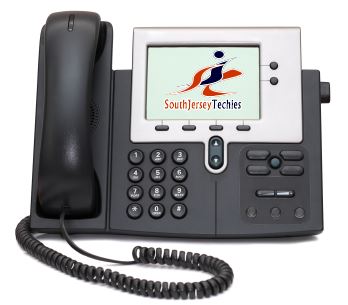
South Jersey Techies is a high quality VOIP provider.

Our VOIP Solutions let you combine voice and data into a single, easy to manage service and helps you focus on your business, not your network and phone systems.

You can control how your calls are routed from a simple, web based portal accessible from any browser in the world. Use the Find-me/Follow-me feature to make sure you never miss another important call, no matter where you are. With this premium level feature, you get to decide which business calls get through to you at your desk, your cell phone or even at home if you like. You also get to decide which callers go directly to voice mail without even ringing your line.

South Jersey Techies offers a wide range of VOIP Phone Services.  We also offer cheaper, simpler plans that include both local and nationwide long distance calling.

With our hosted VoIP solution there is no expensive PBX equipment in your office to go down, fail or get damaged during a storm. Only your IP phone handsets reside in your office, and those can be easily taken out and moved at any time.

Go VOIP – Go Green – it has a good ring to it don’t you think

South Jersey Techies VoIP systems are more energy efficient and help reduce the need for work related travel and car usage.  Our VOIP Solutions also help reduce paper usage. A great example of this is the fax to e-mail system enabling your company to save on paper usage as the fax no longer has to be printed out, and this applies to both incoming and outgoing faxes.

South Jersey Techies VOIP Advantages:

  • Lower Costs: Save money by combining your phone and data networks
  • Greater Functionality
  • Less maintenance
  • Excellent Voice Clarity and Call quality
  • Free calling features with optional advanced features
  • Mobility: The ability to use your smartphone as an extension of the office phone system, including the ability to have business calls automatically directed to your cell phone and make outbound calls from your smartphone as your office number.
  • Portability: The ability to use any computer or office phone as your personal extension.
  • Flexibility: The ability to redesign your phone system on the fly by simply logging into your VoIP provider’s dashboard.

For more information please visit out websites below, we look forward to serving you:

http://southjerseytechies.net/voip.php

http://www.sjtechies.com/voip-phone-services/

How To Remove Windows 7 Antispyware

Remove Windows 7 Antispyware 2012, Vista Antivirus 2012, and XP Security 2012 (See Uninstall Guide Below)

Win 7 Antispyware 2012, Vista Antivirus 2012, and XP Security 2012 are all names for the same rogue anti-spyware program. This family of rogues is promoted in two ways. The first is through the use of fake online antivirus scanners that state that your computer is infected and then prompt you to download a file that will install the infection. The other method are hacked web sites that attempt to exploit vulnerabilities in programs that you are running on your computer to install the infection without your knowledge or permission. Regardless of how it is installed, once it is running on your computer it will install itself as a variety of different program names and graphical user interfaces depending on the version of Windows that is running. Regardless of the name, though, they are all ultimately the same program with just a different skin on it. This rogue goes by different program names, which I have listed below based upon the version of Windows that it is installed on:

Windows XP Rogue Name Windows Vista Rogue Name Windows 7 Rogue Name
XP Antispyware 2012 Vista Antispyware 2012 Win 7 Antispyware 2012
XP Antivirus 2012 Vista Antivirus 2012 Win 7 Antivirus 2012
XP Security 2012 Vista Security 2012 Win 7 Security 2012
XP Home Security 2012 Vista Home Security 2012 Win 7 Home Security 2012
XP Internet Security 2012 Vista Internet Security 2012 Win 7 Internet Security 2012

When installed, this rogue pretends to be a security update for Windows installed via Automatic Updates. It will then install itself as a single executable that has a random consisting of three characters, such as kdn.exe, that uses very aggressive techniques to make it so that you cannot remove it. First, it makes it so that if you launch any executable it instead launches Vista Home Security 2012, XP Internet Security 2012, Win 7 Security 2012, or any of the other names it goes under. If the original program that you wanted to launch is deemed safe by the rogue, it will then launch it as well. This allows the rogue to determine what executables it wants to allow you to run in order to protect itself. It will also modify certain keys so that when you launch FireFox or Internet Explorer from the Window Start Menu it will launch the rogue instead and display a fake firewall warning stating that the program is infected.

Win 7 Antispyware 2012 Screen shot

Once started, the rogue itself, like all other rogues, will scan your computer and state that there are numerous infections on it. If you attempt to use the program to remove any of these infections, though, it will state that you need to purchase the program first. In reality, though, the infections that the rogues states are on your computer are all legitimate files that if deleted could cause Windows to not operate correctly. Therefore, please do not manually delete any files based upon the results from this rogue’s scan.

While running, XP Internet Security 2012, Win 7 Antivirus 2012, and Vista Security 2012 will also display fake security alerts on the infected computer. The text of some of these alerts are:

XP Home Security 2012 Firewall Alert
XP Home Security 2012 has blocked a program from accessing the internet
Internet Explorer is infected with Trojan-BNK.Win32.Keylogger.gen
Private data can be stolen by third parties, including credit card details and passwords.

Malware Intrusion
Sensitive areas of your system were found to be under attack. Spy software attack or virus infection possible. Prevent further damage or your private data will get stolen. Run an anti-spyware scan now. Click here to start.

System danger!
Your system security is in danger. Privacy threats detected. Spyware, keyloggers or Trojans may be working the background right now. Perform an in-depth scan and removal now, click here.

System Hijack!
System security threat was detected. Viruses and/or spyware may be damaging your system now. Prevent infection and data loss or stealing by running a free security scan.

Privacy threat!
Spyware intrusion detected. Your system is infected. System integrity is at risk. Private data can be stolen by third parties, including credit card details and passwords. Click here to perform a security repair.

Stealth intrusion!
Infection detected in the background. Your computer is now attacked by spyware and rogue software. Eliminate the infection safely, perform a security scan and deletion now.

XP Antispyware 2012 Alert
Security Hole Detected!
A program is trying to exploit Windows security holes! Passwords and sensitive data may be stolen. Do you want to block this attack?

Just like the scan results, these security warnings and alerts are all fake and should be ignored.

While running, Win 7 Home Security 2012, XP Antivirus 2012, and Vista Antivirus 2012 will also hijack Internet Explorer so that you cannot visit certain sites. It does this so that you cannot receive help or information at sites like BleepingComputer.com on how to remove this infection. When you attempt to visit these sites you will instead be shown a fake alert stating that the site you are visiting is dangerous and that the rogue is blocking it for your protection. The message that you will see is:

Vista Security 2012 Alert
Internet Explorer alert. Visiting this site may pose a security threat to your system!

Possible reasons include:
– Dangerous code found in this site’s pages which installed unwanted software into your system.
– Suspicious and potentially unsafe network activity detected.
– Spyware infections in your system
– Complaints from other users about this site.
– Port and system scans performed by the site being visited.

Things you can do:
– Get a copy of Vista Security 2012 to safeguard your PC while surfing the web (RECOMMENDED)
– Run a spyware, virus and malware scan
– Continue surfing without any security measures (DANGEROUS)

Just like the fake security alerts, the browser hijack is just another attempt to make you think that your computer has a security problem so that you will then purchase the program.

Without a doubt, this rogue is designed to scam you out of your money by hijacking your computer and trying to trick you into thinking you are infected. Therefore, please do not purchase this program , and if you have, please contact your credit card company and dispute the charges stating that the program is a computer infection. Finally, to remove Win 7 Antispyware 2012, Vista Antivirus 2012, and XP Security 2012 please use the guide below, which only contains programs that are free to use.

Tools Needed for this fix:

  • Malwarebytes’ Anti-Malware


Automated Removal Instructions for Win 7 Antispyware 2012 & Vista Antivirus 2012 using Malwarebytes’ Anti-Malware:

  1. Print out these instructions as we will need to close every window that is open later in the fix.
  1. It is possible that the infection you are trying to remove will not allow you to download files on the infected computer. If this is the case, then you will need to download the files requested in this guide on another computer and then transfer them to the infected computer. You can transfer the files via a CD/DVD, external drive, or USB flash drive.
  1. This infection changes settings on your computer so that when you launch an executable, a file ending with .exe, it will instead launch the infection rather than the desired program. To fix this we must first download a Registry file that will fix these changes. From a clean computer, please download the following file and save it to a removable media such as a CD/DVD, external Drive, or USB flash drive. FixNCR.reg.  Once that file is downloaded and saved on a removable devices, insert the removable device into the infected computer and open the folder the drive letter associated with it. You should now see the FixNCR.reg file that you had downloaded onto it. Double-click on the FixNCR.regfile to fix the Registry on your infected computer. You should now be able to run your normal executable programs and can proceed to the next step.If you do not have any removable media or another clean computer that you can download the FixNCR.reg file onto, you can try and download it to your infected computer using another method. On the infected computer, right click on the Internet Explorer’s icon, or any other browser’s icon, and select Run As or Run as Administrator. If you are using Windows XP, you will be prompted to select a user and enter its password. It is suggested that you attempt to login as the Administratoruser. For Windows 7 or Windows Vista, you will be prompted to enter your Administrator account password.Once you enter the password, your browser will start and you can download the above FixNCR.reg file. When saving it, make sure you save it to a folder that can be accessed by your normal account. Remember, that you will be launching the browser as another user, so if you save it to a My Documents folder, it will not be your normal My Documents folder that it is downloaded into. Instead it will be the My Documents folder that belongs to the user you ran the browser as. Once the download has finished, close your browser and find the FixNCR.reg file that you downloaded. Now double-click on it and allow the data to be merged. You should now be able to run your normal executable programs and can proceed to the next step.
  1. Now we must first end the processes that belong to Win 7 Antispyware 2012 & Vista Antivirus 2012 and clean up some Registry settings so they do not interfere with the cleaning procedure. To do this, please download RKill to your desktop from the following link.RKill Download Link.  When at the download page, click on the Download Now button labeled iExplore.exe download link . When you are prompted where to save it, please save it on your desktop.
  1. Once it is downloaded, double-click on the iExplore.exe icon in order to automatically attempt to stop any processes associated with Win 7 Antispyware 2012 & Vista Antivirus 2012 and other Rogue programs. Please be patient while the program looks for various malware programs and ends them. When it has finished, the black window will automatically close and you can continue with the next step. If you get a message that RKill is an infection, do not be concerned. This message is just a fake warning given by Win 7 Antispyware 2012 & Vista Antivirus 2012 when it terminates programs that may potentially remove it. If you run into these infections warnings that close RKill, a trick is to leave the warning on the screen and then run RKill again. By not closing the warning, this typically will allow you to bypass the malware trying to protect itself so that rkill can terminate Win 7 Antispyware 2012 & Vista Antivirus 2012 . So, please try running RKill until the malware is no longer running. You will then be able to proceed with the rest of the guide. If you continue having problems running RKill, you can download the other renamed versions of RKill from the rkill download page. All of the files are renamed copies of RKill, which you can try instead. Please note that the download page will open in a new browser window or tab.Do not reboot your computer after running RKill as the malware programs will start again.
  1. There have been reports of this infection being bundled with the TDSS rootkit infection. To be safe you should also run a program that can be used to scan for this infection. Please follow the steps in the following guide:

How to remove Google Redirects or the TDSS, TDL3, or Alureon rootkit using TDSSKiller

If after running TDSSKiller, you are still unable to update Malwarebytes’ Anti-malware or continue to have Google search result redirects, then you should post a virus removal request using the steps in the following topic rather than continuing with this guide:

Preparation Guide For Use Before Using Malware Removal Tools and Requesting Help Topic

If TDSSKiller requires you to reboot, please allow it to do so. After you reboot, reboot back into Safe Mode with Networking again.

  1. Download Malwarebytes’ Anti-Malware, also referred to as MBAM, from the following location and save it to your desktop:Malwarebytes’ Anti-Malware Download Link (Download page will open in a new window)
  1. Once downloaded, close all programs and Windows on your computer, including this one.
  1. Double-click on the icon on your desktop named mbam-setup.exe. This will start the installation of MBAM onto your computer.
  1. When the installation begins, keep following the prompts in order to continue with the installation process. Do not make any changes to default settings and when the program has finished installing, make sure you leave both the Update Malwarebytes’ Anti-Malware and Launch Malwarebytes’ Anti-Malware checked. Then click on the Finish button.
  1. MBAM will now automatically start and you will see a message stating that you should update the program before performing a scan. As MBAM will automatically update itself after the install, you can press the OK button to close that box and you will now be at the main program as shown below.


  1. On the Scanner tab, make sure the the Perform full scan option is selected and then click on the Scan button to start scanning your computer for Win 7 Antispyware 2012 & Vista Antivirus 2012 related files.
  1. MBAM will now start scanning your computer for malware. This process can take quite a while, so we suggest you go and do something else and periodically check on the status of the scan. When MBAM is scanning it will look like the image below.


  1. When the scan is finished a message box will appear as shown in the image below.


You should click on the OK button to close the message box and continue with the Vista AntiSpyware 2012 & Win 7 Home Security removal process.

  1. You will now be back at the main Scanner screen. At this point you should click on the Show Results button.
  2. A screen displaying all the malware that the program found will be shown as seen in the image below. Please note that the infections found may be different than what is shown in the image.


You should now click on the Remove Selected button to remove all the listed malware. MBAM will now delete all of the files and registry keys and add them to the programs quarantine. When removing the files, MBAM may require a reboot in order to remove some of them. If it displays a message stating that it needs to reboot, please allow it to do so. Once your computer has rebooted, and you are logged in, please continue with the rest of the steps.

  1. When MBAM has finished removing the malware, it will open the scan log and display it in Notepad. Review the log as desired, and then close the Notepad window.
  1. You can now exit the MBAM program.
  1. As many rogues and other malware are installed through vulnerabilities found in out-dated and insecure programs, it is strongly suggested that you use Secunia PSI to scan for vulnerable programs on your computer. A tutorial on how to use Secunia PSI to scan for vulnerable programs can be found here:How to detect vulnerable and out-dated programs using Secunia Personal Software Inspector

Your computer should now be free of the Vista AntiSpyware 2012 & Win 7 Home Security program. If your current anti-virus solution let this infection through, you may want to consider purchasing the PRO version of Malwarebytes’ Anti-Malware to protect against these types of threats in the future.

If you are still having problems with your computer after completing these instructions, then please follow the steps outlined in the topic linked below:

Preparation Guide For Use Before Using Malware Removal Tools and Requesting Help

To see the original article in its entirety click here.


Speeding Up Your Home Internet: Tricks and Tips

Though we live in an age of nearly-ubiquitous broadband, it still seems like certain pages don’t load as quickly as one would like.  After you’ve tried changing your ISP (Internet service provider), or ordering a T1 internet connection, consider that many problems can be solved with a series of tips and tricks, outlined below.

  • The first area to make changes is your browser.  Microsoft’s Internet Explorer once held an overwhelmingly large market share, but that’s no longer the case.  Browsers such as Mozilla Firefox, Google Chrome, and Safari from Apple have all become increasingly popular.  They are free to install and render websites much more efficiently than Internet Explorer.  Plus, they have two additional benefits, both of which can help keep your computer and internet running fast.  First, these browsers are more secure, including precautions to prevent malware such as viruses from being installed, a common cause of computer slowness.  Also, these browsers allow the user to install extensions, or programs designed to modify the browser’s functionality.
  • Extensions can be used to remedy another common cause of perceived Internet slowness.  More and more websites include Flash and JavaScript.  While neither is inherently bad, more content takes more time to load and render.  Of you feel you can do without the bells and whistles, there are extensions designed to block this content from being downloaded and shown on your computer.  AdBlock Plus just blocks advertising, but Flashblock blocks all Flash content.  If you’re not ready to go that far, ClickToFlash is a great extension.  It stops Flash content from being shown initially, but gives the user the option of clicking to display it.
  • If checking out your computer yields no positive results, your router might be to blame.  The router’s function is to take a single Internet connection and split it so that every device in the house can make use.  This is very handy, but if the router is wireless and the person installing it does not know better, it can open your network to attack.  All routers should be password protected and secured using the strongest method supported by your devices.  WPA2 authentication is currently the best.  If the network remains unprotected, your connection may be slowed by neighbors leeching from your connection.

These are only a few of the most common causes of Internet slowness.  Hopefully one of the solutions will work for you!

The Microsoft Surface, Windows 8 Tablet From Microsoft

“It embodies hardware and software working together. People want to work and play,” Steve Ballmer said today amid much fanfare at Milk Studios in downtown Los Angeles. Microsoft has officially entered the ring with the Apple IPad. Microsoft views the Windows 8 Surface Tablet  as a “stage for Windows 8.” It’s 9.3mm thin, has full size USB 2.0 ports, a massive kickstand and weighs only 1.5 lbs. The casing is made out of magnesium (specifically, a material Microsoft calls VaporMg) and screen is covered in the Gorilla Glass 2 and optically bonded, a feature for the Microsoft Windows 8 Surface Tablet brags was specifically made for the Surface Tablet. The Microsoft Windows 8 Surface Tablet is directly aimed at consumers, and with that, the iPad.

Windows 8 is at the core of  Microsoft’s Surface Tablet. As such, it’s Metro device but also has access to all the Windows, not to mention Xbox features. Microsoft Surface Tablet is clearly the product Microsoft had in mind when it announced the Xbox SmartGlass feature at E3 earlier in the month.

Microsoft also announced several accessories for the Microsoft Surface Tablet including a clever 3mm thick cover that features a full (albeit super-slim) keyboard. Since it’s held on by magnets, it will likely be called a copy of the iPad’s SmartCover, too. The backside of the Surface even features a massive, unit-wide kickstand.

There will be two hardware options for Microsoft’s Surface Tablet, with both an ARM option and, for the full Windows experience, an Intel chip.

But like most hardware, it’s nothing without the right software. Ballmer was very clear at the beginning of the announcement event that the Microsoft Surface Tablet’s strength is the Windows ecosystem. This tablet runs Windows 8, and with that, both Metro and the traditional desktop environment. Every application that runs on Windows, save perhaps Skyrim and the like, should run on a x86 Surface.

Still, if Microsoft is attempting to take on Apple, it will need to court a new crop of developers. The iPad’s strength comes from its legions of small 3rd party devs that for the most part completely ignore all things Microsoft. Up until this product, there wasn’t another tablet platform with the same sort of penetration numbers as the iPad. But with the Surface Tablet, Microsoft is essentially giving developers a massive user base as the applications will hit both mobile and desktop units — and Metro’s dedication to the touchscreen makes the deal even sweeter.

The new Windows RT-powered Surface Tablet will sport either 32 or 64GB of storage depending on the purchaser’s preference, while the more traditional Intel variant will come with either 64 or 128GB. Microsoft declined to dive into specifics about their new tablet’s release, though they were quick to note that the Surface tablets would be priced “competitively” when they make it to market.


To View Full Article Click Here

Windows 8 Launch: 15 Days and Counting

The invitations to the ball have arrived!

October 25th is going to be busy one for Microsoft watchers, fans, and foes. 

Drip, drip, drip

The Redmondians are continuing to torture us Microsoft watchers with a slow flow of information about the company’s bet-its-business launch.

We already knew Microsoft planned to launch Windows 8 and its ARM-based Surface RT devices in New York City on October 25, thanks to a save-the-date invitation we got a while back. We knew those products would become available commercially the following day, and we found out this week that Microsoft would be opening 30-plus holiday pop-up stores in the U.S. and Canada on October 26 as well.

As of October 4, we now know that the launch is going to be a lengthy affair — from 10 a.m. to 3 p.m. ET.

Here’s what I just got in my in-box:

Will there also be, as some are reporting, some kind of “midnight madness” event here in New York to coincide with Windows 8 and Windows RT PCs, tablets — and Microsoft’s own Surface RTs — going on sale as of October 26? No word on that yet. (I asked.) But I’d be surprised if there wasn’t. Microsoft officials have said its Surface tablet devices will be sold only through its own brick-and-mortar stores, as well as “select” Microsoft online stores. Those without a Microsoft Store nearby will only be able to purchase online, unless Microsoft modifies its previously stated plan.

Microsoft still has not released pricing or a full and complete spec list for its Surface RT tablets/PCs. It has not yet made them available for preorder. The Intel-based Surface Pro versions are not due out until three months, give or take, after the Windows RT launch.

If you’ll be in/around New York City on October 25 and 26, stay tuned for information about a meetup/tweetup that a few of us Microsoft bloggers, including my Windows Weekly cohost and Windows SuperSite editor, Paul Thurrott, are planning. More details on that to come soon via Twitter. Hope you can join us.

To View Full Article Click Here

Microsoft Office Coming to Android and Apple

Microsoft Office coming to Android and Apple devices in early 2013

Summary: A Microsoft executive let slip in the Czech Republic that the long-rumored Microsoft Office for Android smartphones and tablets and Apple iPad and iPhones will be arriving in early 2013. Microsoft now denies that their executive was speaking accurately.

We’ve known for months that Microsoft was bringing a version of Microsoft Office 2013 to Android tablets and Apple’s iPad family. Now, according to the Czech tech news site, IHNED, Microsoft product manager Petr Bobek has said that Microsoft is planning to release native iOS and Android versions of Microsoft Office 2013 in the first quarter of 2013

Bobek, a Microsoft Office portfolio manager in the Czech Republic, said that these new versions of Office will be available to larger companies and Microsoft partners In December 2012. small-office/home-office (SOHO) and household users will have to wait until at least February. The online version of Office 365 edition for mobile devices and tablets will appear in early 2013.

In an e-mail, the author of the INHED story clarified that the release would be after March 2013. “We had a slight miscommunication with the MS guys and the timeline for Office for iOS and Android is not a March release, but release sometime after March.”

Officially, the only thing Microsoft had to say at first was that “As we shared previously, Office Mobile will work across Windows Phones, Android phones and iOS, and we have nothing additional to announce today about retail availability of the new Office.”

Later the same day, Microsoft’s head of corporate communications, Frank X. Shaw, denied the whole story. Shaw tweeted, “The information shared by our Czech Republic subsidiary is not accurate. We have nothing further to share.”

No matter when Microsoft delivers the Android and iOS goods, Microsoft’s support of any version of Office on a non-Windows smartphone or tablet strikes me as an odd move. In a shareholder letter, Microsoft CEO Steve Ballmer said that Microsoft is shifting its model to focus on devices and services. This is a radical and dangerous shift for a company that’s always made it money from software licensing. And, now, instead of using Office as a crowbar to pry users from iPads and Android tablets to its Surface tablets, Microsoft is going to offer Microsoft Office 2013 on its device rivals? Odd. Very odd.

Historically, Microsoft has locked its customers into its software ecosystem. Since Microsoft is a non-starter in the mobile space, I find it surprising that they’re not trying to exploit its Office suite in a similar manner in this new market.

That said, given the early reports of Office 2013, which didn’t even have touch enabled for its tablet versions by default, I don’t see Google, with Google Docs and QuickOffice, being worried about Microsoft being a rival on either devices or services anytime soon.

Microsoft CEO Ballmer: Devices, Devices!

Summary: In case you didn’t get the memo — or CEO Steve Ballmer’s latest shareholder letter — Microsoft officially is a devices and services company now.

Microsoft really wants to make sure its shareholders, customers, partners and competitors realize it’s not just a big software company any more.

In an October 9 letter to shareholders, part of Microsoft’s just-released fiscal 2012 annual report, CEO Steve Ballmer repeated his new “devices and services company” mantra to drive it home.

Ballmer hasn’t (yet) chanted “devices, devices, devices” in front of any public or private audiences (that we know of, at least) in the way he once infamously chanted “developers, developers, developers.”

But Ballmer told The Seattle Times a few weeks back that Microsoft can and should be considered a devices and services company. The latest Ballmer shareholder letter re-emphasizes that message.

From the letter:

“Last year in this letter I said that over time, the full value of our software will be seen and felt in how people use devices and services at work and in their personal lives. This is a significant shift, both in what we do and how we see ourselves — as a devices and services company. It impacts how we run the company, how we develop new experiences, and how we take products to market for both consumers and businesses. The work we have accomplished in the past year and the roadmap in front of us brings this to life.”

The Ballmer shareholder letter also claimed again that Microsoft is still counting on its partners to produce business and consumer devices and hardware that customers want. But it’s clear Microsoft isn’t getting into the hardware game on a lark or just to incent its OEMs to make more well-designed products, as some company watchers and partners have said.

Ballmer noted that, going forward, Microsoft plans to continue to focus on the development of “new form factors that have increasingly natural ways to use them including touch, gestures and speech.”

Along with the Xbox, the Microsoft Surface — which Microsoft described as “a series of Microsoft-designed and manufactured hardware devices” in its latest proxy statement (also released today) — are here to stay and seemingly will include more products as part of the family.

Every Budget is an IT Budget

Summary: Technology will be embedded everywhere and disrupt traditional IT and the vendors and ecosystem that goes with it.

ORLANDO—Global technology spending will surpass the $4 trillion mark in 2016 and digitization of industries will ultimately force a rethink on what is IT overall, according to Gartner.

In other words, the technology pie is going to get a lot larger, but murkier.

The big theme: Cloud, mobile, social and big data will come together to create a technology boom with a bevy of challenges and disruption ahead.

“Every budget is an IT budget,” said Peter Sondergaard, senior vice president of research at Gartner. “Technology is embedded in every product.”

His point: More technology spending will occur outside traditional procurement methods. Consumers will spend more disposable income on technologies. Industries traditionally thought to be non-tech will be digitized. And technology will be embedded into everything.

There will be chief digital officers in most companies. By 2015, 25 percent of companies will have a chief digital officer. The role: Digitize the business.

Gartner’s theme at its Symposium CIO powwow is that there’s a nexus of technologies that will revamp corporate technology, vendors and employment. Nexus is a word that will be beaten to death at this annual CIO leadership therapy session. The forces inside this nexus are all interdependent.

Some takeaways to ponder from Sondergaard’s talk:

  • Big data is the killer application of the cloud.
  • The cost savings of cloud haven’t been realized—subscriptions have trumped pay as you go.
  • 80 percent of businesses are using SaaS.
  • IT departments mostly use private clouds.
  • Two versions of cloud are emerging—IT’s and everyone else.
  • Business process services in the cloud will be a $145 billion market in 2016, doubling from today.
  • Cloud will develop and transform with or without IT’s support.
  • It’s the end of the beginning for corporate IT.
  • Corporate IT needs to think mobile first in all designs.
  • Big software vendors won’t be able to think mobile first.
  • There will be more iPads in the enterprise than BlackBerries in two years.
  • Enterprises will have to spend time monitoring physical assets and the data they spew.
  • Social computing will become more important.
  • 10 organizations in the U.S. will each spend more than $1 billion on social media in 2016.
  • Automated and paid reviews will be common nefarious uses of social media.
  • Continual stream of information will transform decision-making and industries.
  • 85 percent of marketing organizations will outsource the analysis of big data.
  • Companies will be judged based on the quality of their algorithms.
  • CIOs will have to find new workers to do the big data jobs required.
  • CIOs will have to think like entrepreneurs.

And the effects of this disruption:

  • Consumers will spend more disposable income on technology spending. Consumer tech spending was 3% of disposable income in 2011. By 2015 will be 3.5 percent of spending.
  • Security infrastructure will have to be rethought completely because it could hinder progress.
  • Social and reputation wars will become an issue just like malware.
  • The IT market will change. The large IT megavendors are being challenged by at least one of the forces in the nexus. “Are your vendors accelerating your march into the future or putting the brakes on your progress?” asked Sondergaard.
  • Spending on technology outside the IT market will surpass levels inside.
  • 1.9 million IT jobs will be created in the U.S.
  • 6 million jobs in the U.S. created by information economy over the next 4 years.
  • There isn’t enough talent to fill those jobs.
CALL US NOW!