Back to Top

Tech, Web, Cloud & Cabling Services

Category: Hosted Services

Hosted Services Category

Mac Office 2011 Support Ends Oct 10

End of support is sneaking up on enterprise employees running Office on a Mac

Companies that have employees running Office for Mac 2011 have just over 100 days to replace the suite’s applications with those from last year’s upgrade, Office for Mac 2016.

Support ends for Office for Mac 2011 on Oct. 10, a date that Microsoft first stamped on the calendar two years ago, but has not widely publicized since. As of that date, the Redmond, Wash., developer will cease supplying patches for security vulnerabilities or fixes for other bugs.

The individual applications — Excel, PowerPoint, Outlook and Word — will continue to operate after support ends, but companies will be taking a risk, however small, that malware exploiting an unpatched flaw will surface and compromise systems.

To receive security and non-security updates after Oct. 10, IT administrators must deploy Office for Mac 2016 or instruct workers covered by Office 365 to download and install the newer suite’s applications from the subscription service’s portal.

Office for Mac 2011’s end-of-support deadline was originally slated for January 2016, approximately five years after the productivity package’s release. But in the summer of 2015, when it was clear that 2011’s successor would not be ready by early 2016, Microsoft extended its lifespan by 21 months. At the time, Microsoft cited the long-standing policy of supporting a to-be-retired product for “2 years after the successor product is released” when it added time to 2011.

Mac users: Steerage Class

The impending cutoff for Office for Mac 2011 is an issue only because Microsoft shortchanges Office for Mac users. Unlike the Windows version of Office, which receives 10 years of security support, those that run on macOS are allotted half that. Microsoft has repeatedly classified Office for Mac as a consumer product to justify the half-measure, even for the edition labeled “Home and Business.”

Nor does Microsoft update and service Office for Mac for corporate customers as it does the far more popular Windows SKU (stock-keeping unit). The latter will be upgraded with new features, Microsoft said in April, twice each year for enterprise subscribers to Office 365 ProPlus, with each release supported for 18 months before giving way to a pair of successors.

Mac editions, however, are refreshed with new tools at irregular intervals, often long after the same feature debuts in the same Windows application. (Recently, for example, Microsoft added a delivery-and/or-read receipt option to the Mac version of Outlook; that functionality has been in Outlook on Windows since 2013.) And because there are no regular, large-scale feature upgrades to Office for Mac, support is not curtailed by the release schedule as with Windows.

The difference between Offices — the behemoth Windows on one side, the niche Mac on the other — has been put into even starker relief recently: Microsoft has adopted March and September dates for launching new upgrades to Windows 10, Office 365 ProPlus, and last week, Windows Server, but made no similar promises for Office for Mac 2016.

It’s clearly the odd app out.

Have questions?

Get answers from Microsofts Cloud Solutions Partner!
Call us at: 856-745-9990 or visit: https://southjerseytechies.net/

South Jersey Techies, LL C is a full Managed Web and Technology Services Company providing IT Services, Website Design ServicesServer SupportNetwork ConsultingInternet PhonesCloud Solutions Provider and much more. Contact for More Information.

To read this article in its entirety click here.
Word Headers & Footers: 8 Pro Tips

Microsoft word

Even a novice Word user can display page numbers in a document’s header of footer. The process is fundamental. Advancing beyond the basics is easier than you might think, and you might be surprised how many things you can do with a header or footer! In this article, you’ll find eight tips that will move you from basic user to advanced, at least with headers and footers.

1. Display page numbers in shapes

Most documents over a few pages display a page number in the header of footer. If the document warrants a bit of visual appeal, you can display that number in an interesting and colorful shape. First, add the shape to the header using an easy-to-use built in gallery. Next, use the header’s current position property to add the number.

To add the shape, do the following:

  1. Open the footer by double-clicking the footer area. In Word 2003, choose Header and Footer from the View menu.
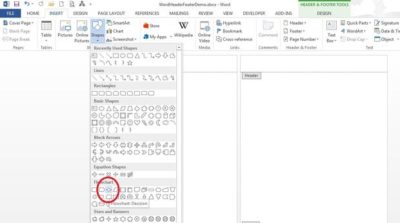
  2. While in the header, click the Insert tab. In the Illustrations group, click Shapes and choose one, such as the diamond shape in the Flowchart section (Figure A). In Word 2003, use the Drawing toolbar to access shapes.
    Figure A

figure A

  1. Click inside the footer and drag to create the shape. It’s okay if the shape extends beyond the footer border a bit.
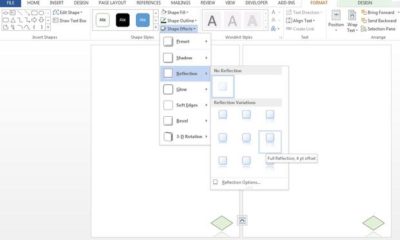
  2. With the shape inserted, use the contextual Format tab to format the shape. I used the Shape Fill options to change the color to lettuce green; I used the Shape Outline drop-down to change the outline to dark green; I used the Shape Effects Reflection option to add a full reflection (Figure B) that fades off the bottom edge (which might not be possible to print but works fine for electronic viewing). In Word 2003, choose AutoShape from the Format menu (with the shape selected).
    Figure B

figure B

With the shape inserted and formatted, add the page number as follows:

  1. Right-click the shape and choose Add Text from the resulting submenu. In Word 2003, use the Header and Footer contextual toolbar to insert the page number, and then format as you normally would.
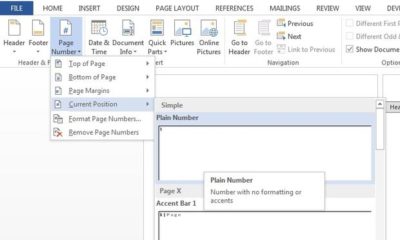
  2. Click the contextual Design tab. In the Header & Footer group, click Page Number.
  3. Choose Current Position from the drop-down.
  4. Choose Plain Number (the first option) from the gallery (Figure C).
    Figure C 

figure C

  1. Select the number and format it. I applied black font color (Figure D).
    Figure D

figure D

This simple example shows you how to display the page number in a shape. It’s up to you to determine whether doing so is appropriate for your document.

2. Insert a graphic

A header is a good place to display your organization’s logo or some other branding graphic. To do so, open the header or footer as you normally would and then do the following:

  1. With the document in edit mode, click the Insert tab. In Word 2003, choose Picture | From File from the Insert menu, and then skip to step 3.
  2. In the Illustrations group, click Picture.
  3. Use the Insert Picture dialog to locate the file
  4. Select the file, and then click Insert

You probably didn’t realize how easy that would be! While graphics in the header and footer might sound like a great idea, use them sparingly.

3. Use header graphic as a page tab

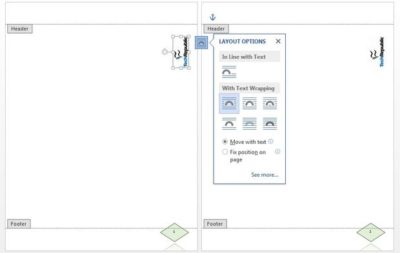
You can use the header or footer to display a graphic on every page, but you don’t have to leave it in the header or footer. For instance, you might want to use a graphic as a page tab. To do so, insert the graphic as you normally would (see tip 2). Then, drag it out of the header or footer area as shown in Figure E. If the graphic won’t move, click the Layout Options icon and choose a text wrapping option. The Layout Options icon is new to 2013. In earlier versions, you’ll find these options on the contextual Format tab. You might want to rotate the graphic as well.

Figure E

figure E

4. Use sections

A large document might need to change information in the header or footer as the document evolves. The way to implement this requirement is to use section breaks. Simply click inside the document (not inside the header or footer) where you want the new section to begin. Click the Page Layout tab, click Breaks in the Page Setup group, and then choose the best break type for your document. Return to the header or footer of the new section and make the necessary changes. In Word 2003, breaks are on the Insert menu.

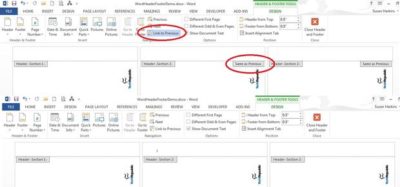
For a header that doesn’t repeat information from the previous section, click the Link to Previous option in the Navigation group on the contextual Design tab. Doing so breaks the connection between the two sections. Figure F shows the toggle option linked and not linked. When sections are linked, the option has a dark background and Word displays the Same as Previous tab to the right. When the link is broken, the option has no background and the tab is gone. In Word 2003, this option is on the Header and Footer toolbar (and available only if there’s more than one section).

Figure F

figure F

You must break the link between headers and footers separately.

5. Display custom info

The header or footer area is a great place to display custom information about the document or author using fields. To do so, open the document’s header or footer. Then, position the cursor and do the following:

  1. Click the Insert tab. In Word 2003, choose Field from the Insert menu and skip to step 4.
  2. In the Text group, click the Quick Parts option.
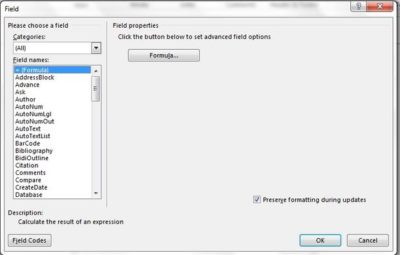
  3. From the drop-down, choose Field.
  4. Using the resulting dialog (Figure G), choose a field, such as Author. Set properties, if necessary, and click OK. (You could also use AutoText or Document Property.)
    Figure G

figure G

6. Gallery page number options replace existing header or footer

Be careful when using the Page Number option to display page numbers in the header or footer. If you’ve already created a header or footer, and you add the page number last, use the Current Position option. Other options from the gallery will replace the existing header or footer. (Galleries aren’t available in Word 2003.)

7. Modify the style

Word applies the Header and Footer style to header and footer text, respectively. Both styles are based on Normal. The easiest way to change the appearance of the text for either is to modify the appropriate style. Doing so will impact the entire document, so don’t change the style if you want to change the format for a single section.

8. Reference a content control

Sometimes, you want to repeat information from the body of the document in the header or footer. In later versions of Word, using content controls, this is easily done. First, you add a content control and create a custom style for it. To the header, you add a StyleRef field that references the style you applied to the content control. In this way, you can easily display the contents of the content control in the header. Let’s work through a simple example:

  1. Position the cursor where you want to insert the content control.
  2. Click the Developer tab and then click Rich Text Content Control in the Controls group.
  3. Click Properties in the same group and enter a meaningful name, such as ccName . The cc prefix identifies the object as a content control and Name describes its content.
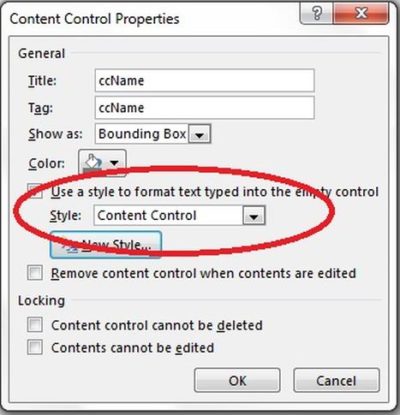
  4. Check the Use a style to format text typed into the empty control option. Don’t worry about what’s in the Style control at this point.
  5. Click New Style.
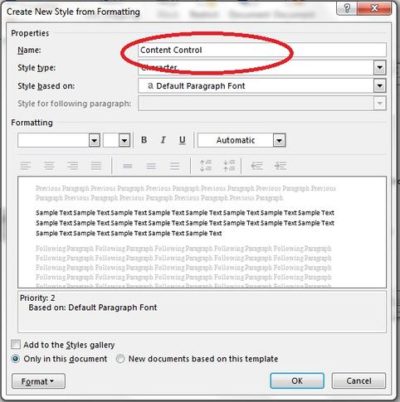
  6. Name the new style appropriately, such as Content Control (Figure H). You can change the Style based on setting, but don’t for this example. In this way, you can see how easy it is to set this technique up without making a lot of unnecessary changes. It’s the same style used for the body of the document; it just has a different name.
    Figure H

figure H

  1. Click OK, and Word updates the Style control to reflect the new style you just created (Figure I).
    Figure I

figure I

  1. Click OK.
  2. Open the header and position the cursor where you want to display the contents of the content control you just added.
  3. Click the Insert tab.
  4. In the Text group, click Quick Parts, and choose Field from the drop-down list.
  5. In the resulting dialog, choose StyleRef from the Field names list.
  6. Choose Content Control from the Style name list
  7. Click OK.
  8. Double-click the content control to close the header.

Enter text into the content control, and the field in the header will update accordingly. Although this technique has a lot of steps, it isn’t difficult to implement.

Have questions?

Get help from IT Experts/Microsofts Cloud Solutions Partner
Call us at: 856-745-9990 or visit: https://southjerseytechies.net/

South Jersey Techies, LLC is a full Managed Web and Technology Services Company providing IT Services, Website Design ServicesServer SupportNetwork ConsultingInternet PhonesCloud Solutions Provider and much more. Contact for More Information.

To read this article in its entirety click here.
Cloud Computing: Companies Stay Cautious

In a new report from SolarWinds, 92% of companies say adopting cloud is critical to long-term success. But, most don’t think they’ll ever be fully cloud.

On March 29, IT management software provider SolarWinds released its annual report titled IT Trends Report 2016: The Hybrid IT Evolution, detailing some interesting trends around cloud adoption in the enterprise and the rise of hybrid IT.

First off, according to the results of the report, cloud adoption is a foregone conclusion for most businesses. The report found that 92% of the IT professionals who were surveyed said adopting cloud was important to long-term success in their business. Nearly 30% labeled it extremely important.

However, despite this widespread adoption, most organizations aren’t fully embracing the cloud within the whole of their organization. Joel Dolisy, CIO of SolarWinds, said that is because the cloud isn’t the best option for all workloads.

“The findings of this year’s study paint a clear picture: Cloud adoption is nearly ubiquitous, but it’s not now and will not in the foreseeable future be suitable for all workloads, and even if it were, very few if any companies would convert all of their existing applications to run in the cloud,” Dolisy said in a press release.

The data to support Dolisy’s statement came from the report as well. Only 43% of respondents said that half or more of their IT infrastructure will make it to the cloud over the next 3-5 years. And, 60% said it is unlikely that their entire infrastructure will ever be fully cloud-based. Additionally, 9% said they hadn’t migrated any piece of their infrastructure to the cloud.

Dolisy called the resulting dynamic hybrid IT, where an organization blends critical on-premises tools with cloud-based technologies. This affects IT as well, he said, because it shifts the dynamic of the corporate IT professional to one who can guarantee always-on performance regardless of where he or she is based. Additionally, these professionals need new skills and tools to effectively deploy and manage these environments.

Basically, the rise of this hybrid IT means that IT professionals are faced with two key tasks: Leveraging the cloud to increase efficiency and performance, while maintaining security of critical systems.

So, what are the benefits of this hybrid IT infrastructure? The SolarWinds report listed three in ranked order:

  1. Infrastructure cost-reduction
  2. Increased infrastructure flexibility/agility
  3. Relieving internal IT personnel of day-to-day management of some infrastructure

However, there are some challenges to managing this type of infrastructure as well. Of the respondents, 62% listed security as the top challenge within these type of environments.

Then, of course, there are also inherent challenges to encouraging cloud adoption as well. SolarWinds pegged the top three barriers to overall cloud adoption (which, in turn, affects hybrid IT) as follows:

  1. Security/compliance concerns
  2. Legacy system support
  3. Budget limitations

Nearly 70% have migrated their applications to the cloud, almost 50% have migrated their storage, and 33% have moved their databases.

So, how does this affect your organization? Well, new trends in infrastructure often require new skills to support them.

According to the survey, only 27% are convinced that their IT department has the skills needed to fully support a hybrid IT environment. To succeed in hybrid IT, respondents said they needed better monitoring tools, application migration support, distributed architectures, service-oriented architectures, and automation or vendor management tools.

Hybrid IT also require support from leadership as well. Of those surveyed, 56% felt that they had the support needed to do hybrid IT right.

“In short, IT is everywhere,” Dolisy said. “Effectively managing and monitoring the new environment—from on-premises to the cloud with multiplying endpoints—to be able to act when needed is more critical now than ever.”

The 3 big takeaways for readers

1. Hybrid IT, a mix of cloud and on-premises solutions, is growing as the prevailing trend in IT architecture. Almost all respondents said cloud was critical to future growth, but many felt that their organization would never be fully cloud.

2. Hybrid IT can offer cost reduction, increased agility, and management relief. But, it also brings security challenges, issues with legacy systems, and budget challenges.

3. If your organization is engaging hybrid IT, your IT professionals need the proper tools and skills to stay on top of it. Look into monitoring, different architectures, and automation to help support your staff.

Have questions?

Get answers from Microsofts Cloud Solutions Partner!
Call us at: 856-745-9990 or visit: https://southjerseytechies.net/

South Jersey Techies, LL C is a full Managed Web and Technology Services Company providing IT Services, Website Design ServicesServer SupportNetwork ConsultingInternet PhonesCloud Solutions Provider and much more. Contact for More Information.

To read this article in its entirety click here.
Most Business PCs Haven’t Upgraded to Win10

According to a new study released by Softchoice, less than 1% of business machines have upgraded to Windows 10, opting instead for Windows 7.

Windows10controversy

Windows 10 has been one of the more controversial OS releases of recent memory, bringing privacy concerns, bugs that disable certain hardware, and other nasty surprises. And the enterprise, it seems, is avoiding it altogether.

According to a recent study by IT services firm Softchoice, less than 1% of Windows machines were actually running Windows 10. That means that, one year after the release of the latest Microsoft OS, more than 99% of machines haven’t yet made the switch.

The study was performed as part of a TechCheck analysis by Softchoice, which looked at more than 402,814 Windows devices operating among 169 organizations. So, what were these firms choosing instead of Windows 10? Overwhelmingly, they were running Windows 7.

“It appears businesses are hesitant to take advantage of the various Windows 10 upgrades and, at least for now, are satisfied with Windows 7,” Softchoice’s David Brisbois wrote in a press release. “Historically, OS upgrades have been viewed as major time and resource-consuming undertakings, and this may be influencing the decision today to hold off on Windows 10.”

The Softchoice looked at these Windows machines in both US and Canadian firms from January 1, 2016 through May 31, 2016. At the time, only 2,999 devices were running Windows 10, which accounted for a grand total of 0.75% of the whole.

In terms of business break down, 42 of the 169 businesses (25%) had no trace of Windows 10 in their environment. Additionally, 73 of the 169 (43%) had fewer than 10 devices running Windows 10 present in their environment.

In contrast, 91% of the machines were operating with Windows 7, which marked an 18% increase over the same period of time in 2015. The next largest group were the Windows XP holdouts, which counted for 5% of the devices. Devices running Windows 8 were at 4%, which is double from the 2% measured the year prior.

“It seems businesses don’t see an urgent need to move operating systems, so long as their cloud-based applications are still running fine on Windows 7,” Softchoice’s Microsoft director Craig McQueen wrote in a press release. “In addition to the security benefits, I think once organizations grasp the user benefits—such as touch and Cortana—we will start to see a boost in adoption.”

Although, some of those features may not be enough to sway some users. Cortana, for example, has proven very difficult to get rid of, and other updates have led to frozen machines. The most recent Windows 10 Anniversary Update actually broke some third-party webcams, without a workaround or fix until September. That’s bad news for a business that relies heavily on video conferencing.

Still, there are a host of new features and tools that could make it easier to get work done.

The 3 big takeaways for Readers

  • 1. A recent study by Softchoice has shown that less than 1% of enterprise organizations have upgraded their Windows devices to Windows 10, even a full year after the OS was released.
  • 2. Most business were still running Windows 7, according to the study, as Windows 8 also saw poor adoption rates after its release.
  • 3. A plethora of concerns over privacy and functionality, combined with the effort it takes to upgrade a whole organization, likely led to the low adoption numbers for Windows 10.

Have questions?

Get answers from Microsofts Cloud Solutions Partner!
Call us at: 856-745-9990 or visit: https://southjerseytechies.net/

South Jersey Techies, LL C is a full Managed Web and Technology Services Company providing IT Services, Website Design ServicesServer SupportNetwork ConsultingInternet PhonesCloud Solutions Provider and much more. Contact for More Information.

To read this article in its entirety click here.
Is Your Yahoo Password in 450K Leak?

Takeaway: Hackers have posted 450K Yahoo email addresses and passwords online, and hint Gmail, Hotmail, other services are next. How can you check if your users’ accounts are among them?

Hackers posted more than 400,000 Yahoo Voice and email names and passwords and the posting might not be over yet.

Yahoo reps say they are working on the compromised system–not great timing for a beleaguered company enduring what Yahoo chair Alfred Amoroso called a “tumultuous” time for the company. The firm apologized in an online statement and did not comment further at this writing.

Not a Yahoo user? IT pros and security experts worry this most recent hack on Yahoo – allegedly perpetrated by a group calling itself d3dd3 – is likely “way bigger than Yahoo,” said Marcus Carey, in a Reuters report. Hotmail, MSN, Live, Gmail and other personal services are at risk, too, he said.

NOTE: If you want to check your own or other users’ Yahoo emails to see if they are part of the current leak, there’s an easy way to check here at Sucuri Malware Labs. Just type in the email address and search.

Plan for next time

Change passwords. Consider training customers on utilities like Lastpass. IT pros we interviewed across the board said users in enterprises who use open cloud-based email services, or other non-enterprise communication methods like Skype or Google Groups, should, at the very least, be using such utilities, which provide more control and protection in case of events like this one.

With so much data potentially compromised via users relying on such BYOD services as these, “the process (to avoid future attacks) is much easier if (users) have Lastpass,” said John Livingston, a tech pro for the American Red Cross in Savannah, Georgia. “Time to change your Yahoo, Google, Hotmail, and AOL passwords. And with LastPass, each site and service has a unique password, which limits damage if the password does get out. Changing passwords then is quick and easy. Plus if you’re a manager you don’t have to worry about remembering a new password.”

“Once this clears, I will be changing the passwords for Gmail, even though there’s no confirmation on that (hack) yet,” said Brian Geniesse, who works the IT tech desk at his firm in Monominee, Michigan. “Also be careful. Password managers can be hacked just the same.”

Yahoo is to blame ultimately, most IT pros we interviewed told us.

“Shame on Yahoo for not running normal security audits on (its) networks – and services that would have detected the SQL injection vulnerability (reportedly) used in the attack,” adds Dan Phillips, an IT pro in Cambridge, Ontario, Canada.

Geniesse expanded on that with a message that will resound with most IT pros and CTOs. Most people use weak passwords–see below.

“You can preach the use of LastPass and the like until you are blue in the face but users will never change their habits unless you force them,” Geniesse said. And “Yahoo needs to force some kind of password complexity to help protect their users.”

So many folks are checking the hack post, the hackers allegedly responsible are having trouble maintaining traffic load. Due to high traffic on this group’s site, the page with the Yahoo hacked emails and passwords is going up and down. We caught part of it in a cut and paste.

When it was up earlier today, it read in part:

We hope that the parties responsible for managing the security of this subdomain will take this as a wake-up call … not as a threat …

There have been many security holes exploited in webservers belonging to Yahoo … ?that have caused far greater damage than our disclosure (today). Please do not take (the posting) lightly. The subdomain and vulnerable parameters have not been posted to avoid further damage …

The author quotes author Jean Vanier from his book, Becoming Human: “Growth begins when we begin to accept our own weakness,” Vanier wrote.

If you’re a Star Wars, Star Trek or comic book fan, just change your passwords right away, other observers add. And talk your users into it to. Check this out: CNET’s Declan McCullagh wrote a program to analyze the most frequently used passwords using data from the post of 450K email addresses and passwords. He listed:

  • 2,295: The number of times a sequential list of numbers was used, with “123456? by far being the most popular password. There were several other instances where the numbers were reversed, or a few letters were added in a token effort to mix things up.
  • 160: The number of times “111111? is used as a password, which is only marginally better than a sequential list of numbers. The similarly creative “000000? is used 71 times.
  • 780: The number of times “password” was used as the password. Apparently, absolutely no thought went into security in these instances.
  • 233: The number of times “password” was used in conjunction with a few numbers behind it. Apparently, the barest minimum of thoughts went into security here.
  • 437: The number of times “welcome” is used. With a password like that, you’re just asking to be hacked.
  • 333: The number of times “ninja” is used. Pirates, unfortunately, didn’t make the list.
  • 137,559: The number of Yahoo credentials that were leaked.
  • 106,873: The number of Gmail credentials that were leaked. Hotmail, which was the next most frequently cited e-mail service, had fewer than half the number of users hit.
  • 161: The number of times “freedom” is used, suggesting a lot of patriotic users. “America” was used 68 times.
  • 161: The number of times the f-word is used in some combination. There are a lot of angry people out there.
  • 133: The number of times “baseball” appears as a password. It’s the most popular sport on the list, proving that it is indeed America’s national pastime. It just may not be the best password.
  • 106: The number of times “superman” is used as a password. That’s nearly double the amount of times “batman” is used and triple the frequency of “spiderman.”
  • 52: The number of times “starwars” is used. The force is not with this password.
  • 56: The number of times “winner” is used.32: The number of times “lakers” appears. It tied with “maverick,” although fortunately “the_heat” or “celtics” weren’t on this list.
  • 27: The number of times “ncc1701? is used as a password. For those of you who aren’t trekkies, that’s the designation code for the Starship Enterprise. “startrek” is used 17 times, while “ncc1701a,” the designation for the Enterprise used in later Star Trek movies, is used 15 times.

10 Ways Office 2016 Boosts Productivity

Microsoft wants Office 2016 to be the last office productivity suite you will ever need. Here are 10 things you should know about how it plans to make that happen.

Microsoft Office 2016

On September 22, 2015, Microsoft released Office 2016 to the masses. At first glance, you may not notice much has changed since Office 2013. But when you look deeper, you will find some interesting and productivity-enhancing differences.

For years we’ve been promised wonderful benefits from cloud computing, and Microsoft Office 2016 is trying to deliver on those promises. It’s designed to meet our expectations of what a cloud-based, mobile-ready productivity suite can and should be. Only time will tell if Office 2016 actually delivers the goods, but the initial reviews are promising.

Here are 10 things Microsoft Office 2016 offers as it aspires to be the last productivity suite you are ever going to need.

1: Real-time co-authoring

Co-authoring has been around for a long time for many Office apps, but with Office 2016 that collaboration can now take place in real time. That means you will be able to see what your co-conspirators are doing in a Word document or PowerPoint presentation as they do it—and conversely they will be able to see what you are doing. It won’t even matter where you are or what device you are using.

2: OneNote notebook sharing

OneNote is one of the most useful applications available in Microsoft Office, and it is also one of the least appreciated. Office 2016 allows you to share a OneNote notebook with as many people as you want. And because OneNote works with text, images, worksheets, emails, and just about any other document type you can think of, it can be a great central resource for a team working on a project. That is, if they know to use it.

3: Simplified document sharing

Office 2016 simplifies sharing of documents by adding a Share button to the upper-right corner of your Office apps. Clicking that button will give you one-click access to share your document with anyone in your contacts list. You don’t even have to leave the document to do it. That does sound pretty simple.

4: Smart attachments

If you’re like me, you have to send email attachments just about every day. In previous versions of Office, adding attachments to an email required you to navigate to the location where the document was stored. You can still do that in Office 2016, but if the document in question was one you worked on recently, it will now show up in a list of shareable documents right there in Outlook. Essentially, Office 2016 keeps a universal recently worked on list for you.

5: Clutter for Outlook

Like most of us, you probably get a ton of email every day. Wading through the Outlook inbox to prioritize each email takes time and hampers your ability to be productive. Office 2016 adds a new category to your inbox triage toolbox, called Clutter. You can designate certain emails as low priority and they, and future similar emails, will be deposited automatically into a Clutter folder in Outlook. So now you have four categories for email: important, clutter, junk, and delete.

6: Better version history

Collaboration and creativity can be a messy process, with shared documents changing drastically over time. Office 2016 compensates for potentially lost ideas by keeping past versions of documents and making them available directly from Office applications under the History section of the File menu.

7: New chart types in Excel

The ability to visualize data with an Excel chart has always been a welcome and powerful capability. However, the list of available chart types found in previous versions of Excel needed an update. Office 2016 adds several new chart types to the templates list, including Waterfall, which is great chart if you like to track the stock market. Other new chart types include Treemap, Pareto, Histogram, Box and Whisker, and Sunburst.

8: Power BI

Between the release of Office 2013 and Office 2016, Microsoft spent a great amount of time and capital acquiring technologies that shore up its business intelligence and analytical applications. Power BI, a powerful analytics tool, now comes bundled with your Office 365 subscription. Knowing every little detail about how your business is running is essential information, and Power BI can bring it all together for you.

9: Delve

Delve is another new tool that comes with an Office 365 subscription. The best way to describe Delve is as a central location that gives you access to everything you have created, shared, or collaborated on using Office 2016. It is another recently worked on list, only this version of the list is stored in the cloud—so you can access it from anywhere with any device using the Office 365 Portal.

10: Purchase choices

Office 2016 is generally available only as a subscription. Even if you buy a boxed version of Office 2016, you are buying access to an annual subscription, with one exception. If you purchase the Office Home & Student 2016 box, you pay a one-time fee of $149.99 for just the basic Office apps.

Microsoft has definitely stacked the deck so that the best bang for the buck is a subscription to Office 365, which includes Office 2016 plus all the cloud services. Businesses should be looking at one of the Office 365 for Business subscriptions. It is also going to be your best deal.

Have questions?

Get help from IT Experts/Microsofts Cloud Solutions Partner
Call us at: 856-745-9990 or visit: https://southjerseytechies.net/

South Jersey Techies, LLC is a full Managed Web and Technology Services Company providing IT Services, Website Design ServicesServer SupportNetwork ConsultingInternet PhonesCloud Solutions Provider and much more. Contact for More Information.

To read this article in its entirety click here.

10 Must-Have Purchases for SMBs

Saving-Money

Small and Medium-Size Businesses (SMBs) will often take shortcuts to cut costs when purchasing.  To avoid disasters such as a loss of data or work, SMBs are strongly suggested to focus on the ten points below.

Hardware

Considering the rapid change of technology requirements, a pro-active approach for replacing desktops, laptops, servers, and networking hardware is to look five years into the future.

Backup Software

Although built-in backup software and Windows Server backup are adequate, purchasing a third-party backup solution will have the ability to recover from an image.

Internet Connection

Providing your SMB with a consumer-grade DSL line would not be an efficient business plan. Setting up a network that provides your business with more bandwidth than required will prevent a network bottleneck from occuring.

Firewall

Securing your business with only Windows built-in firewall is not ideal.  Configuring a Cisco, Fortinet, or Sonicwall is more secure, reliable and flexible in a SMB environment.

Cloud Storage

Cloud storage provides scalability, reliability and portability.  Cloud storage is divided into three categories:  Infrastructure-as-a-Service (IaaS), Platform-as-a-Service (PaaS) and Software-as-a-Service (SaaS).  Many companies are transferring to Cloud services for access to data outside the network.

Website

Online presence has become an important key for all businesses.  A solid solution is to have a strong website, blogging and effectively using social media.

Redundancy

Redundancy is an appropriate investment towards ensuring that your SMBs network does not go down.  Similar to backups, redundancy does not affect everyday business but should an incident arise, you’ll be glad it’s there.

Support

IT Support is a necessity, whether it’s an in-house department, third-party service provider, or support for software.

Mobile Devices

The ability to work from outside the office and accessing data from anywhere  is now an important key for businesses.  Setting up a virtual private network enables laptops, tablets and smartphones to connect and work from anywhere.

Printers

Supply your SMB with a printer that has the sustainability and features required for business use.


Microsoft announced Attack Simulator for Office 365 Threat Intelligence


Admins can send simulated phishing and attack emails to find security and training weaknesses.

A few weeks ago, Microsoft released a public preview for Attack Simulator for Office 365 Threat Intelligence. On April 17th Microsoft announced that Attack Simulator is now generally available. Attack Simulator for Office 365 Threat Intelligence is available to all Office 365 E5 or Office 365 Threat Intelligence customers.

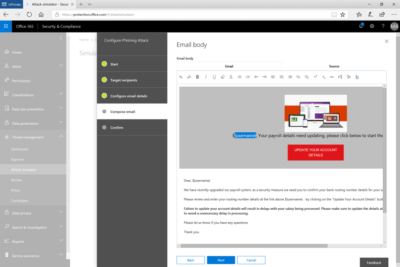
With Attack Simulator, customers can launch simulated attacks on their end users, determine how end users behave in the event of an attack, and update policies and ensure that appropriate security tools are in place to protect the organization from threats.  The GA of Attack Simulator adds a new HTML editor so realistic looking HTML emails can be sent in simulations of spear-phishing.  Also, two spear-phishing templates are available for immediate use in the spear phishing simulation.

Attack Simulator includes the three attack scenarios from our public preview.

Display Name Spear Phishing Attack: Phishing is the generic term for socially engineered attacks designed to harvest credentials or personally identifiable information (PII). Spear phishing is a subset of this phishing and is more targeted, often aimed at a specific group, individual, or organization.  These attacks are customized and tend to leverage a sender name that generates trust with the recipient.

Password Spray Attack: To prevent bad actors from constantly guessing the passwords of user accounts, often there are account lockout policies.  For example, an account will lockout after a certain number of bad passwords are guessed for a user.  However, if you were to take a single password and try it against every single account in an organization, it would not trigger any lockouts.  The password spray attack leverages commonly used passwords and targets many accounts in an organization with the hope that one of the account holder uses a common password that allows a hacker to enter the account and take control of it.  From this compromised account, a hacker can launch more attacks by assuming the identity of account holder.

Brute Force Password Attack: This type of attack consists of a hacker trying many passwords or passphrases with the hope of eventually guessing correctly. The attacker systematically checks all possible passwords and passphrases until the correct one is found.


This video demonstrates how Attack Simulator can help organizations educate users to become more secure from cyber threats.  With Attack Simulator, admins can train all their end users, and especially those who are attacked most often.  This proactive training is a powerful way to ensure that your organization can prevent the impact from advanced threats.  Over the coming months, more threat simulations will be added to Attack Simulator so organizations can simulate the most prevalent threat types from the modern threat landscape.

Experience the benefits of Attack Simulator for Office 365 Threat Intelligence by beginning an Office 365 E5 trial today.  Also, learn more about how Microsoft leverages threat intelligence and the value of threat intelligence.

The best new features coming to Microsoft’s latest OS: Windows 10

Windows10

Microsoft continues to build out Windows 10 – with a bumper crop of new features announced at its Build conference last week.

These enhancements will be pushed to to Windows 10 users over the coming months, with many arriving in summer when the OS will get a major upgrade dubbed the Windows 10 Anniversary Edition.

Here are the key upgrades heading to Windows 10.

The write stuff

ink-SJTechies

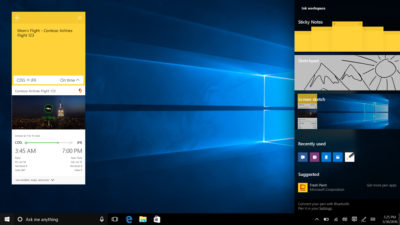
Using a digital pen to write and scribble on the screen of Windows 10 PCs and tablets will get easier.

In a boost to devices that support such pens, such as the Microsoft’s Surface tablet, the OS’ new Windows Ink feature will allow users to jot down notes on the screen without unlocking the device.

Windows Ink will also allow users to write messages on sticky notes and, if appropriate, have them automatically translated into calendar appointments and reminders.

Support for Windows Ink in Microsoft Office, Maps, the Edge browser and other apps will allow users to draw, write and annotate using their pen. Windows Ink will make using the pen in Office more satisfying than it currently is, for example tidying up highlighted marks on documents so they neatly align with text.

Windows 10 will also gain the Ink Workspace, a hub for launching apps that support writing and sketching using the Surface Pen.

Ink everywhere

win10-inking-SJTechies

Support for drawing, writing and annotating using digital pens will likely come to many apps.

Microsoft says that support for Microsoft Ink will be easily added to Universal Windows Platform apps, requiring just two lines of XAML code.

Digital ruler

win10-ruler-SJTechies

It sounds simple, but the new on-screen ruler should prove to be a useful addition for those who want to draw straight lines using a digital pen.

Smarter Cortana

cortana-SJTechies

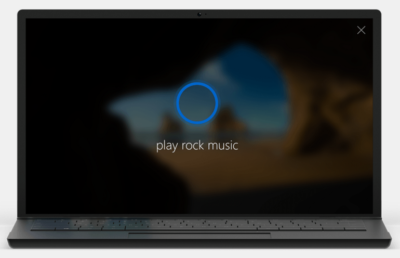
The attraction of a virtual assistant is the simplicity with which they allow you to carry out tasks.

To ease the process of using Windows 10’s Cortana, the voice-controlled assistant will no longer require you to log into Windows, with users able to make a note, play music or set a reminder from the lock screen.

Cortana will also become more proactive and make suggestions based on a user’s past behaviour – offering to order lunch or to arrange transportation.

More apps will also be able to use Cortana to automatically complete tasks for users or to carry out actions based on context, such as the user’s current location or time of day.

Windows Hello comes to apps and the web

hello-SJTechies

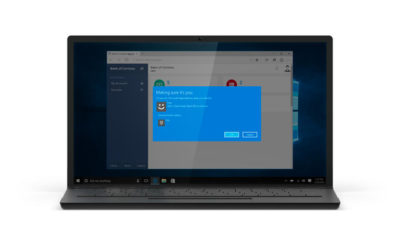
Windows 10 already lets you log into the OS using your face.

The anniversary edition will extend this biometric log-in to Windows apps and websites via Microsoft Edge. As with the OS, users will be able to authenticate their identity using a facial, iris or fingerprint scan.

Another new feature will allow users to unlock a PC running Windows 10 Enterprise Edition by tapping a Windows Hello-enabled phone, although Microsoft has said the feature will only be available on “select premium phones”.

Android app notifications on Windows 10

android-SJTechies

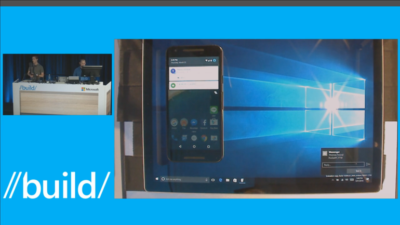
In future, notifications on Android devices will be able to show on Windows 10 PCs.

Any notification popping up on the Android notification panel can, via the Cortana Android app, also appear as a notification on a linked Windows 10 desktop.

Microsoft demoed the ability at its recent Build conference for developers.

Browser extensions

extensions-SJTechies

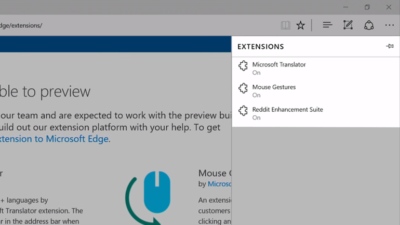
Microsoft’s Edge browser will soon gain support for extensions.

Extensions are small programs that can be downloaded to add new functionality to a browser, and are already found in Chrome, Firefox and other browsers today.

Support for extensions has already been added to Edge for those testing pre-release builds of Windows 10 under the Insider program.

The first extensions to be supported by Edge are Microsoft Translator, an extension that automatically translates pages in over 50 different languages, an extension to augment mouse gestures support, and a preview version of the Reddit Enhancement Suite.

Microsoft promises more extensions will be added later this year, including AdBlock, LastPass and Evernote.

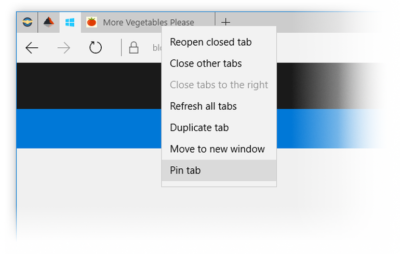
Pinned browser tabs

pinned-tabs-SJTechies

Microsoft is also adding to Edge the ability to pin your favorite sites and web apps so they always have a tab open in the browser.

Updated Maps app

maps-app-pc-SJTechies

The Maps app has several new features, as well as UI and performance improvements.

Additions include one-tap access to search and directions, the ability to view multiple searches and directions at the same time, labels for search results on the map and turn-by-turn directions read by Cortana.

The improved app is available now to those testing Windows 10 under the Insider program.

Access Linux command-line tools in Windows

bash-win10-SJTechies

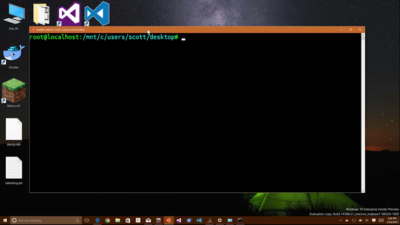
More one for developers, Microsoft is also bringing the ability to run the Bash shell to Windows.

The Bash shell is a command line interpreter that is available on many different Linux distributions, as well as Mac OS X.

The shell includes a host of tools that allow power users to carry out and orchestrate complex chains of commands.

Bash will be available via a Universal Windows Platform app, which will provide an image of the Linux distribution Ubuntu and run on the Windows 10 desktop.

Users will be able to use the Bash shell to download and install programs from the command line, as they do from inside Ubuntu. Microsoft says Ubuntu software will run as fast in the Windows app as it does natively, thanks to a software subsystem for handling Linux system calls.

Microsoft has described the app as offering a developer toolset. While it has access to the files on the Windows PC, the app only provides access to a command line — not a graphical desktop — and reportedly has limits on what it can be used for, such as not being able to run a server.

Have questions?

Get answers from Microsofts Cloud Solutions Partner!
Call us at: 856-745-9990 or visit: https://southjerseytechies.net/

South Jersey Techies, LL C is a full Managed Web and Technology Services Company providing IT Services, Website Design ServicesServer SupportNetwork ConsultingInternet PhonesCloud Solutions Provider and much more. Contact for More Information.

To read this article in its entirety click here.
Microsoft Snip brings Windows screenshots to life with voice and ink

Microsoft released a free app for capturing, annotating, and explaining screenshots.

Snip

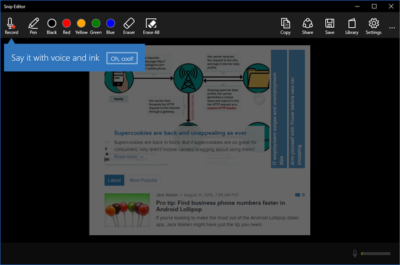
In late August 2015, Microsoft released a free screen capture and annotation application called Snip (Figure A). But the twist in the story is the fact that Snip is not part of some master strategic plan.

Figure A

Snip

Snip

While the name is a bit confusing, Snip is not the same thing as the improved Snipping Tool that comes free with Windows 10. The Snipping Tool will capture screenshots, but it does not have any annotation features.

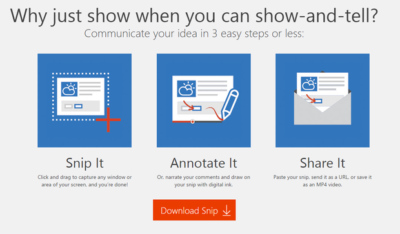
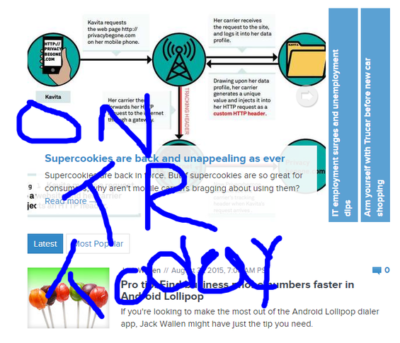
Snip, on the other hand, is a free tool developed through a Microsoft Garage project that allows users to capture screenshots and then annotate them (Figure B). With the Snip app, users can draw on their captured screenshots using a software pen, which is available in various colors and sizes.

Figure B

Snip

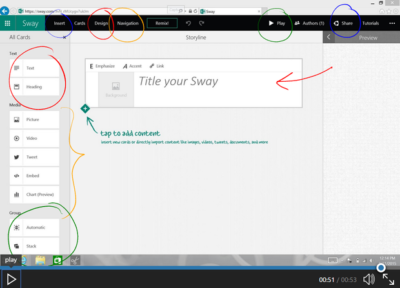
Snip can also record the annotation, and your vocal description of it, to create a short video that users can share as a URL or as an MP4 video (Figure C). These features make Snip very useful for creating and sharing short instructional videos.

Figure C

Snip

Cultural shift

The important thing to note about Snip is the way it was developed and released. Under the Garage program, Microsoft employees are encouraged to work on projects outside of their official duties. The idea is to create an environment where employees can experiment, innovate, and exercise their creativity.

Releasing an app like Snip in beta form to the general public indicates a shift in attitude when it comes to app development at Microsoft. Snip has been released without worrying about whether it will generate a revenue stream or ever make a profit. As far as I can tell, there are no expectations regarding Snip and how it fits into the overall corporate strategy.

Snip is just a nice little program that Microsoft thinks people will find useful, and they’d appreciate some feedback on how to make it even better. No promises, no expectations, no quid pro quo. Microsoft is trying hard not to be the stodgy old software company anymore.

Snip also fits in well with Microsoft’s major theme for Office 365, which postulates that a modern productive workforce needs better collaboration tools. When you consider recent app releases like Edge, Sway, and now Snip, you can begin to see where Microsoft is heading.

If you need to communicate an idea in a simple but effective way, Microsoft is saying it has the tool you seek. It would not  be a surprise if Snip become an integrated part of Office 365 in the near future.

Have questions?

Get answers from Microsofts Cloud Solutions Partner!
Call us at: 856-745-9990 or visit: https://southjerseytechies.net/

South Jersey Techies, LLC is a full Managed Web and Technology Services Company providing IT Services, Website Design ServicesServer SupportNetwork ConsultingInternet PhonesCloud Solutions Provider and much more. Contact for More Information.

To read this article in its entirety click here.
CALL US NOW!