Back to Top

Tech, Web, Cloud & Cabling Services

Critical iPhone Spyware Fix Released

Apple has updated its software for iPhones to address a critical vulnerability that independent researchers say has been exploited by notorious surveillance software to spy on a Saudi activist.

Researchers from the University of Toronto’s Citizen Lab said the software exploit has been in use since February and has been used to deploy Pegasus, the spyware made by Israeli firm NSO Group that has allegedly been used to surveil journalists and human rights advocates in multiple countries.

The urgent update that Apple (AAPL) released Monday plugs a hole in the iMessage software that allowed hackers to infiltrate a user’s phone without the user clicking on any links, according to Citizen Lab. The Saudi activist chose to remain anonymous, Citizen Lab said.

Apple credited the Citizen Lab researchers for finding the vulnerability.

“Attacks like the ones described are highly sophisticated, cost millions of dollars to develop, often have a short shelf life, and are used to target specific individuals,” Ivan Krsti?, head of Apple Security Engineering and Architecture, said in a statement.

Krsti? said Apple rapidly addressed the issue with a software fix and that the vulnerability is “not a threat to the overwhelming majority of our users.”

Still, security experts encouraged users to update their mobile devices for protection.

In a statement, NSO Group did not address the allegations, only saying, “NSO Group will continue to provide intelligence and law enforcement agencies around the world with life saving technologies to fight terror and crime.”

The firm has previously said its software is only sold to vetted customers for counterterrorism and law enforcement purposes.

Researchers, however, say they have found multiple cases in which the spyware was deployed on dissidents or journalists. In 2019, Citizen Lab analysts alleged that Pegasus was used on the mobile phone of the wife of a slain Mexican journalist.

In a lawsuit filed in 2019, Facebook accused NSO Group of being complicit in a hack of 1,400 mobile devices using WhatsApp. (NSO Group disputed the allegations at the time.)

The proliferation of easy-to-use mobile hacking tools has given governments around the world a new and stealthy means of targeting adversaries. Sophisticated spyware made by NSO Group and other vendors has been reportedly used from Uzbekistan to Morocco.

The surge in spyware prompted a United Nations panel of human rights experts in August to call for a moratorium on the sale of such surveillance tools. The UN panel said the ban should remain in place until governments have “put in place robust regulations that guarantee its use in compliance with international human rights standards.”

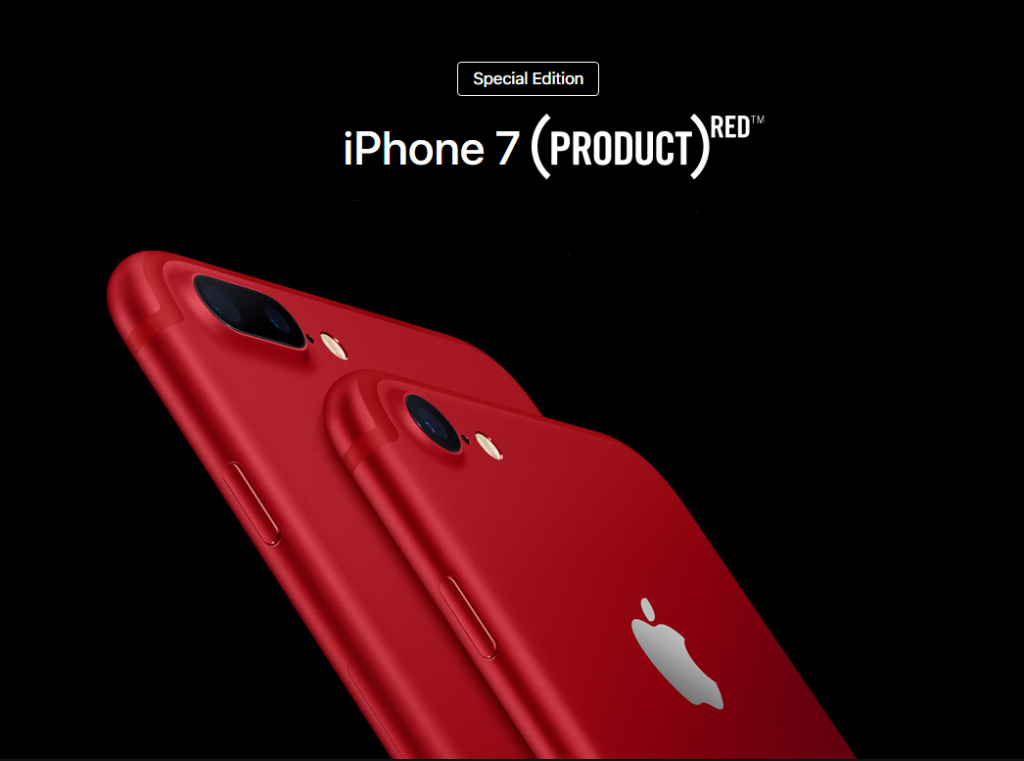
Apple’s Red iPhone 7 Supports Charity

iPhone SE gets a storage boost, too.

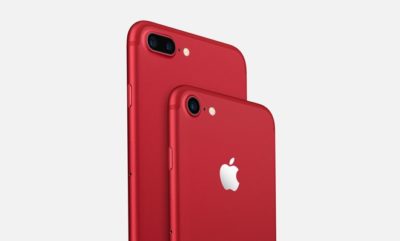
Apple just made upgrading to an iPhone 7 a philanthropic decision by adding a red special edition to the lineup. The new red aluminum finish, which is available to order for both iPhone 7 and 7 Plus in-store and online on March 24, is a fundraising effort for the Global Fund. Apple will contribute a portion of red iPhone sales to the fight against AIDS and HIV.

The two new red iPhones will come in 128GB and 256GB storage variations and start at $749 in the U.S. Apple will sell the special editions in more than 40 countries by the end of March, with Brazil, Chile, Colombia, India, and Turkey to come in April. If you live in the U.S., U.K., or China and are part of the iPhone Upgrade Program, you’ll be able to snag an unlocked red iPhone with AppleCare+. In the U.S., the 128GB iPhone 7 will start at $37 a month with the ability to upgrade every year.

Apple has a long-standing relationship with the Global Fund and has a variety of products in its red lineup, including iPod’s, cases, headphones, and speakers. Last December, Apple celebrated its decade-long partnership with the Global Fund by donating proceeds from in-app purchases, exclusive downloads, and newly launched accessories to the nonprofit. The company has so far donated more than $130 million to the Global Fund, making it the organizations’s largest corporate donor.

You can snag a flashy new red iPhone 7 on March 24, starting at $749.

iPhone SE gets a bump, too

Apple hasn’t forgotten about the littlest phone in its lineup, the iPhone SE. The company just doubled the 4-inch phone’s storage to 32GB and 128GB, up from 16GB and 64GB. Those models will be phased out and the roomier new options will start at $399 beginning March 24.

While the flashy new color and iPhone SE upgrade aren’t the biggest iPhone news of the year—that will come in September with the 10th anniversary iPhone 8—it’s nice to see Apple add a little something extra to both its existing flagship and its entry-level phones.

Have questions?

Get answers from Microsofts Cloud Solutions Partner!
Call us at: 856-745-9990 or visit: https://southjerseytechies.net/

South Jersey Techies, LL C is a full Managed Web and Technology Services Company providing IT Services, Website Design ServicesServer SupportNetwork ConsultingInternet PhonesCloud Solutions Provider and much more. Contact for More Information.

To read this article in its entirety click here.

iPhone Wi-Fi Hack Alert: Fix Issued

If you use Wi-Fi on your iOS device, get this security update

The tech giant says there is a new cyber threat, but has taken steps to thwart the attack.  According to the reports, “Apple has now issued a critical security patch for all iOS devices and for Mac computers against a potential hack that could come remotely via Wi-Fi.”


The virus is being considered a potentially serious threat, so the company is urging users to install the updates to protect their devices.

The latest cyber threat is also a risk to Android device users, but Google has taken steps as well to block the virus.

“The vulnerability also has the potential to attack Android devices, but Google issued its own security patch earlier this month.”

Have questions?

Get answers from Microsofts Cloud Solutions Partner!
Call us at: 856-745-9990 or visit: https://southjerseytechies.net/

South Jersey Techies, LL C is a full Managed Web and Technology Services Company providing IT Services, Website Design ServicesServer SupportNetwork ConsultingInternet PhonesCloud Solutions Provider and much more. Contact for More Information.

To read this article in its entirety click here.

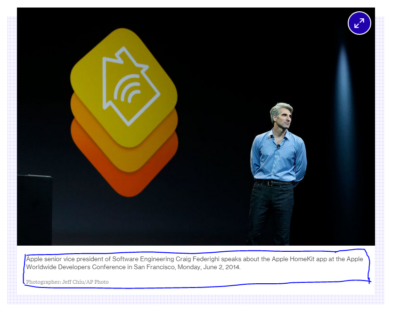
Apple HomeKit Launching in June

Devices based on Apple Inc.’s HomeKit will appear in stores next month, the company said.

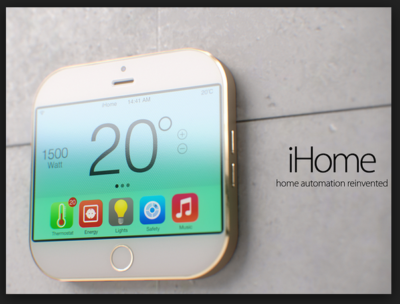
HomeKit, which is built into Apple’s iOS 8 mobile operating system, provides software so makers of garage door openers, light switches and other home devices can be controlled with an iPhone or iPad.

“HomeKit has been available for just a few months and we already have dozens of partners who have committed to bringing HomeKit accessories to market and we’re looking forward to the first ones coming next month,” Trudy Muller, a spokeswoman for Cupertino, California-based Apple, said Thursday in a statement.

Apple Homekit

IDevices has said it will begin selling in the fourth quarter a HomeKit-compatible switch to control doors, lights and other products.

“We’re testing the software, and it works very well,” Chris Allen, chief executive officer of Avon, Connecticut-based iDevices, said Thursday.

Fortune reported earlier Thursday that HomeKit had been delayed by a few months, until August or September.

apple

Have questions?

Our small business team is here to help.
Call us at: 856-745-9990

South Jersey Techies, LLC is a full Managed Web and Technology Services Company providing IT Services, Website Design ServicesServer SupportNetwork ConsultingInternet PhonesCloud Solutions Provider and much more. Contact for More Information.

Tim Cook: FBI Wanted iOS Backdoor

The most important Tech Case in a Decade

Customer Letter – Apple

February 16, 2016

A Message to Our Customers

The United States government has demanded that Apple take an unprecedented step which threatens the security of our customers. We oppose this order, which has implications far beyond the legal case at hand.

This moment calls for public discussion, and we want our customers and people around the country to understand what is at stake.

Answers to your questions about privacy and security

The Need for Encryption

Smartphones, led by iPhone, have become an essential part of our lives. People use them to store an incredible amount of personal information, from our private conversations to our photos, our music, our notes, our calendars and contacts, our financial information and health data, even where we have been and where we are going.

All that information needs to be protected from hackers and criminals who want to access it, steal it, and use it without our knowledge or permission. Customers expect Apple and other technology companies to do everything in our power to protect their personal information, and at Apple we are deeply committed to safeguarding their data.

Compromising the security of our personal information can ultimately put our personal safety at risk. That is why encryption has become so important to all of us.

For many years, we have used encryption to protect our customers’ personal data because we believe it’s the only way to keep their information safe. We have even put that data out of our own reach, because we believe the contents of your iPhone are none of our business.

The San Bernardino Case

We were shocked and outraged by the deadly act of terrorism in San Bernardino last December. We mourn the loss of life and want justice for all those whose lives were affected. The FBI asked us for help in the days following the attack, and we have worked hard to support the government’s efforts to solve this horrible crime. We have no sympathy for terrorists.

When the FBI has requested data that’s in our possession, we have provided it. Apple complies with valid subpoenas and search warrants, as we have in the San Bernardino case. We have also made Apple engineers available to advise the FBI, and we’ve offered our best ideas on a number of investigative options at their disposal.

We have great respect for the professionals at the FBI, and we believe their intentions are good. Up to this point, we have done everything that is both within our power and within the law to help them. But now the U.S. government has asked us for something we simply do not have, and something we consider too dangerous to create. They have asked us to build a backdoor to the iPhone.

Specifically, the FBI wants us to make a new version of the iPhone operating system, circumventing several important security features, and install it on an iPhone recovered during the investigation. In the wrong hands, this software — which does not exist today — would have the potential to unlock any iPhone in someone’s physical possession.

The FBI may use different words to describe this tool, but make no mistake: Building a version of iOS that bypasses security in this way would undeniably create a backdoor. And while the government may argue that its use would be limited to this case, there is no way to guarantee such control.

The Threat to Data Security

Some would argue that building a backdoor for just one iPhone is a simple, clean-cut solution. But it ignores both the basics of digital security and the significance of what the government is demanding in this case.

In today’s digital world, the “key” to an encrypted system is a piece of information that unlocks the data, and it is only as secure as the protections around it. Once the information is known, or a way to bypass the code is revealed, the encryption can be defeated by anyone with that knowledge.

The government suggests this tool could only be used once, on one phone. But that’s simply not true. Once created, the technique could be used over and over again, on any number of devices. In the physical world, it would be the equivalent of a master key, capable of opening hundreds of millions of locks — from restaurants and banks to stores and homes. No reasonable person would find that acceptable.

The government is asking Apple to hack our own users and undermine decades of security advancements that protect our customers — including tens of millions of American citizens — from sophisticated hackers and cybercriminals. The same engineers who built strong encryption into the iPhone to protect our users would, ironically, be ordered to weaken those protections and make our users less safe.

We can find no precedent for an American company being forced to expose its customers to a greater risk of attack. For years, cryptologists and national security experts have been warning against weakening encryption. Doing so would hurt only the well-meaning and law-abiding citizens who rely on companies like Apple to protect their data. Criminals and bad actors will still encrypt, using tools that are readily available to them.

A Dangerous Precedent

Rather than asking for legislative action through Congress, the FBI is proposing an unprecedented use of the All Writs Act of 1789 to justify an expansion of its authority.

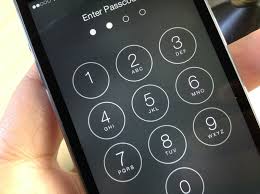
The government would have us remove security features and add new capabilities to the operating system, allowing a passcode to be input electronically. This would make it easier to unlock an iPhone by “brute force,” trying thousands or millions of combinations with the speed of a modern computer.

The implications of the government’s demands are chilling. If the government can use the All Writs Act to make it easier to unlock your iPhone, it would have the power to reach into anyone’s device to capture their data. The government could extend this breach of privacy and demand that Apple build surveillance software to intercept your messages, access your health records or financial data, track your location, or even access your phone’s microphone or camera without your knowledge.

Opposing this order is not something we take lightly. We feel we must speak up in the face of what we see as an overreach by the U.S. government.

We are challenging the FBI’s demands with the deepest respect for American democracy and a love of our country. We believe it would be in the best interest of everyone to step back and consider the implications.

While we believe the FBI’s intentions are good, it would be wrong for the government to force us to build a backdoor into our products. And ultimately, we fear that this demand would undermine the very freedoms and liberty our government is meant to protect.

Tim Cook

Answers to your questions about privacy and security

Have questions?

Get answers from Microsofts Cloud Solutions Partner!
Call us at: 856-745-9990 or visit: https://southjerseytechies.net/

South Jersey Techies, LL C is a full Managed Web and Technology Services Company providing IT Services, Website Design ServicesServer SupportNetwork ConsultingInternet PhonesCloud Solutions Provider and much more. Contact for More Information.

To read this article in its entirety click here.

Amerivest Realty Adopts Cloud Phones


Today’s guest post is written by Joe Ballarino, President and Co-Founder of Amerivest Realty, a full service real estate brokerage. Amerivest switched to RingCentral service last year to address business challenges and improve business operations. Here Joe shares his thoughts about why he made the switch and its positive effects on Amerivest Realty.

Challenges with Our Old Phone System

Previous to RingCentral, we hosted an on-premise phone system. The system often had technical issues which required costly consultants to repair. More importantly, these issues were often total outages which were not only inconvenient, but also adversely affected our business, potentially causing loss of revenue for the brokerage and our associates.

Additionally, system configuration was always challenging. As real estate professionals, most of our associates work outside of the office, relying on their cell phones to properly conduct business. Our system could forward calls to cell phones, but this was an insufficient and inelegant solution because we had no way to monitor or manage calls from our office.

At Amerivest Realty we pride ourselves on the service we provide to our associates and their customers, and strive for an efficient office and business practices, and we knew the on premise system was woefully inadequate to meet these goals.

Why We Moved to RingCentral

The timing was right to make a decision on a new platform because we were about to open an additional office in a new area code. We wanted a single system to accommodate all offices, but the cost of expanding the on-premise system was exorbitant. As we researched the market, we were impressed with RingCentral’s service offering.

In addition to solving issues with hardware and remote associates, RingCentral also let us combine phone and fax services into a single number. We have less to manage, our associate have less to manage, their customers have simpler communication channels, and we could retire the old fax server.

Are We Happy with RingCentral? Yes!

Our switch to RingCentral reduced our telecommunications costs by almost 30 percent, and RingCentral’s cloud-based phone services have exceeded our expectations.

Our IT expense savings were greater than anticipated because RingCentral is configurable by non-technical people. In fact, RingCentral is so easy to use that I mostly set up the system myself. I needed assistance with number porting, but RingCentral’s support team made that process painless.

We were able to set up over 150 extensions and port 200 phone numbers in just a few weeks. Now adding or removing extensions is simple and handled by our administrative staff.

As Amerivest Realty grows, we trust RingCentral to provide for our telecommunication needs. We have confidence in the system to provide for our needs and control costs. As we expand our business, we feel confident in RingCentral’s service growing with us.

Most Business PCs Haven’t Upgraded to Win10

According to a new study released by Softchoice, less than 1% of business machines have upgraded to Windows 10, opting instead for Windows 7.

Windows10controversy

Windows 10 has been one of the more controversial OS releases of recent memory, bringing privacy concerns, bugs that disable certain hardware, and other nasty surprises. And the enterprise, it seems, is avoiding it altogether.

According to a recent study by IT services firm Softchoice, less than 1% of Windows machines were actually running Windows 10. That means that, one year after the release of the latest Microsoft OS, more than 99% of machines haven’t yet made the switch.

The study was performed as part of a TechCheck analysis by Softchoice, which looked at more than 402,814 Windows devices operating among 169 organizations. So, what were these firms choosing instead of Windows 10? Overwhelmingly, they were running Windows 7.

“It appears businesses are hesitant to take advantage of the various Windows 10 upgrades and, at least for now, are satisfied with Windows 7,” Softchoice’s David Brisbois wrote in a press release. “Historically, OS upgrades have been viewed as major time and resource-consuming undertakings, and this may be influencing the decision today to hold off on Windows 10.”

The Softchoice looked at these Windows machines in both US and Canadian firms from January 1, 2016 through May 31, 2016. At the time, only 2,999 devices were running Windows 10, which accounted for a grand total of 0.75% of the whole.

In terms of business break down, 42 of the 169 businesses (25%) had no trace of Windows 10 in their environment. Additionally, 73 of the 169 (43%) had fewer than 10 devices running Windows 10 present in their environment.

In contrast, 91% of the machines were operating with Windows 7, which marked an 18% increase over the same period of time in 2015. The next largest group were the Windows XP holdouts, which counted for 5% of the devices. Devices running Windows 8 were at 4%, which is double from the 2% measured the year prior.

“It seems businesses don’t see an urgent need to move operating systems, so long as their cloud-based applications are still running fine on Windows 7,” Softchoice’s Microsoft director Craig McQueen wrote in a press release. “In addition to the security benefits, I think once organizations grasp the user benefits—such as touch and Cortana—we will start to see a boost in adoption.”

Although, some of those features may not be enough to sway some users. Cortana, for example, has proven very difficult to get rid of, and other updates have led to frozen machines. The most recent Windows 10 Anniversary Update actually broke some third-party webcams, without a workaround or fix until September. That’s bad news for a business that relies heavily on video conferencing.

Still, there are a host of new features and tools that could make it easier to get work done.

The 3 big takeaways for Readers

  • 1. A recent study by Softchoice has shown that less than 1% of enterprise organizations have upgraded their Windows devices to Windows 10, even a full year after the OS was released.
  • 2. Most business were still running Windows 7, according to the study, as Windows 8 also saw poor adoption rates after its release.
  • 3. A plethora of concerns over privacy and functionality, combined with the effort it takes to upgrade a whole organization, likely led to the low adoption numbers for Windows 10.

Have questions?

Get answers from Microsofts Cloud Solutions Partner!
Call us at: 856-745-9990 or visit: https://southjerseytechies.net/

South Jersey Techies, LL C is a full Managed Web and Technology Services Company providing IT Services, Website Design ServicesServer SupportNetwork ConsultingInternet PhonesCloud Solutions Provider and much more. Contact for More Information.

To read this article in its entirety click here.

CALL US NOW!