Back to Top

Tech, Web, Cloud & Cabling Services

Category: Windows

Windows Category

Windows Server 2003 end of life guide

How to organize your migration from Windows Server 2003
 

Following on from end of support for Windows XP in April 2014, we are now rapidly approaching Windows Server 2003 end of life.

Despite Microsoft warning about end of life for Windows Server 2003 as early as April 2013, many organisations are yet to begin their migration away from the server platform. Worse still, many organisations and IT pros are unaware of the huge financial costs and security risks should they continue running Windows Server 2003 past the end of life date.

Reports from HP claim that more than 11 million systems are still running Windows Server 2003. With fewer than 240 days left until end of life, this a huge problem as the estimated time required to migrate a datacentre of 100 or more servers can range from a minimum of three months and upwards of 18 months.

If you own even one of those 11 million servers and you have yet to begin migration, you should be worried. Luck for you, the following guide will migrate you to a position of safety. We will cover the following:

• Windows Server 2003 End of Life date
• Understanding what end of support means for Windows Server 2003 and the associated impacts
• An outline of how to migrate Windows Server 2003
• Resources to aid migration

Windows Server 2003 End of Life date

According to the Microsoft Support Lifecyle section on 14 July 2015, Microsoft will end extended support on all versions of Windows Server 2003/R2.

Understanding what end of support means for Windows Server 2003

From then on, this means no more updates or patches from Microsoft, which can result a less secure and less stable infrastructure for your business. What this really means:

• Maintenance Costs – running legacy servers is expensive. Intrusion detection systems, advanced firewalls and network segmentation are required to protect a now vulnerable Windows Server 2003 platform. You will also have increasing cost from maintaining aging hardware. Current estimates in a TechNet post from Alex Fu place the cost of custom support post end of life at US$200,000 on average. In a Q&A with David Mayer, practice director of Microsoft Solutions for Insight Enterprises, he estimated a support cost of $1500 per server per year.

• No Updates – there will be no more updates to fix bugs, performance issues and security vulnerabilities. To put this into perspective, 2013 saw the release of 37 critical updates for Windows Server 2003/R2. Past the end of life date, these critical issues will remain unfixed leaving you open to cybersecurity dangers such as malicious attacks or electronic data loss.

• No Compliance – once support ends, your organisation will almost certainly fail to meet industry wide compliance standards. Regulations such as HIPAA, PCI, SOX & Dodd-Frank all require regulated industries to run on supported platforms. The impact is twofold: Non-compliance could result in the loss of business, while high transaction fees and penalties from non-compliance could dramatically increase the cost of doing business.

• Software and Hardware Compatibility Issues – new software and hardware devices will not be built to integrate with Windows Server 2003. Sticking with a legacy server means you will likely run into compatibility issues and may not be able to run new instances of software or communicate with the latest devices.

• No Safe Haven – without continued support from Microsoft, virtualized and physical instances of Windows Server 2003/R2 and Microsoft Small Business Server (SBS) 2003 will not pass a compliance audit.

How to migrate from Windows Server 2003

Do not underestimate the task that lies ahead. Migrating applications and server workloads is no easy task. Worryingly, a study by App Zero suggests that 62 per cent of organisations do not have a plan to upgrade or migrate, or even know that EOS is coming.

• Discover – first up is discovering and cataloguing all the software and workloads that are running on Windows Server 2003/R2 at present. Download the Microsoft Assessment and Planning toolkit as this will be a worthy support document.

• Assess – now you have a list it’s time to analyse and categorise all your applications and workloads based on type, criticality, complexity and risk. This helps you prioritise for migration as well as identify issues and opportunities.

• Target – in this step, you must choose a destination for each application and workload. This could be the perfect time to evolve your organisation to the next level and embrace the cloud. Microsoft offers a series of destinations for each application or workload which could include:

billionphotos-1008218 (1)

o Windows Server 2012 R2
o System Center 2012 R2 (Private Cloud)
o Microsoft Azure (Public Cloud)
o SQL Server 2014
o Office 365

• Migrate – now is the time choose a migration plan. Microsoft offers a fantastic Migration Planning Assistant which covers all four steps. Look for official Microsoft training courses to give you an in-depth understanding of the new platforms you are planning to migrate to.

Resources to aid migration

Due to the widespread requirement to migrate, there is a range of fantastic resources to aid migration. These include:

Microsoft Virtual Academy – arguably the largest and best collection of free self-study resources from Microsoft experts including videos, slide decks and self-assessments. Check out the section on migrating to Windows Server 2012, or the Microsoft zure JumpStart.

Windows Server 2003 Roles Migration Processdownload this document and turn it into an A3 poster, stick it on your wall and use it to visualise the whole process.

Microsoft Deployment Toolkitdownload this fantastic resource, which provides a collection of processes, tools and guidance for automating new desktop and server deployments.

Free Software Trials – Microsoft have a series of trials so you can check out the new software. Here they are:

Windows Server 2012 R2 trial
System Center 2012 R2 trial
Microsoft Azure one-month trial
Office 365 trial
SQL Server 2014 trial

Windows Server Migration Services – there are a series of organisations that offer assistance in migrating away from Windows Server 2003. Big players include:

• Dell
• RackSpace
• HP

Time is running out — start your migration away from Windows Server 2003 today. Fail to do so and you find yourself facing some organisation-crippling consequences

Have questions?

Our Business IT Server Migration Specialists in NJ, PA & DE are here to help.
Call us at: 856-745-9990 or visit: https://southjerseytechies.net/server-support/

South Jersey Techies, LLC is a full Managed Web and Technology Services Company providing IT Services, Website Design ServicesServer SupportNetwork ConsultingInternet PhonesCloud Solutions Provider and much more. Contact for More Information.

To read this article in its entirety click here.

Windows Tip of the week: Search for files and folders by date

Search for files and folders by date:

The more files you have, the more frustrating it can be to find the exact one you’re looking for. That’s especially true when you’re using search terms that are common to dozens or even hundreds of saved documents.

One great way to narrow the list is to enter a date-related search operator along with matching parameters, using the search box in the upper-right portion of File Explorer (Windows Explorer in Windows 7). For example, datemodified:2013 tax allows you to filter search results to show only files that contain the word tax and were last saved in 2013.

The search parameter you enter after the colon can be any date, even a partial one. So datemodified: June 2016 works even with the space included. To find only files before or after a given date, use the > and < operators, as in datemodified: >1/1/2016

If you prefer a point-and-click interface, just type datemodified: by itself and use the calendar or predefined options below it.

In Windows 8.1 and Windows 10, you’ll find date-related shortcuts on the Search tab, which appears on the File Explorer ribbon when you click in the search box.

Have questions?

For More Tips & Info from Microsofts Cloud Solutions Partner!
Call us at: 856-745-9990 or visit: https://southjerseytechies.net/

South Jersey Techies, LL C is a full Managed Web and Technology Services Company providing IT Services, Website Design ServicesServer SupportNetwork ConsultingInternet PhonesCloud Solutions Provider and much more. Contact for More Information.

Windows Tip of the week: Check your System Restore settings

Check your System Restore settings:

For many years, System Restore has been one of the most useful tools available for diagnosing and repairing Windows problems. Using System Restore (especially in Safe Mode), you can undo troublesome app installations or driver updates.

But System Restore only works if it’s turned on and properly configured. On Windows 10 devices, you might find that System Restore is disabled for the system (C:) drive.

Unless you’re convinced you’ll never need to use System Restore, I strongly recommend that you turn this feature on. From any supported Windows version, you can check the current configuration and change it if necessary by opening Control Panel > System And Security > System. Click Advanced System Settings in the sidebar on the left and then click the System Protection tab.

Select the C: drive from the Protection Settings list and click Configure. In Windows 8.1 and 10, this leads to a simple on-off switch. In Windows 7, you can choose whether to save previous versions of files as well as system settings. In either case, make sure you reserve enough space for the last restore point.

Have questions?

For More Tips & Info from Microsofts Cloud Solutions Partner!
Call us at: 856-745-9990 or visit: https://southjerseytechies.net/

South Jersey Techies, LL C is a full Managed Web and Technology Services Company providing IT Services, Website Design ServicesServer SupportNetwork ConsultingInternet PhonesCloud Solutions Provider and much more. Contact for More Information.

Windows Tip of the week: Add more places to send files

Add more places to send files:

When you are working in File Explorer and you right-click a file and navigate to the Send To menu item, you’ll see a small list of suggested places where you can send the file. If you Shift + right-click that file instead and then navigate to the Send To Menu item, you will be shown a much more extensive list of places where you can send that file.

Have questions?

For More Tips & Info from Microsofts Cloud Solutions Partner!
Call us at: 856-745-9990 or visit: https://southjerseytechies.net/

South Jersey Techies, LL C is a full Managed Web and Technology Services Company providing IT Services, Website Design ServicesServer SupportNetwork ConsultingInternet PhonesCloud Solutions Provider and much more. Contact for More Information.

Windows Tip of the week: How to Switch from Bing

Switch from Bing:
Microsoft would like you, and your personal assistant Cortana, to use Bing as your default search engine and not Google, etc. You can force Cortana to use a different search engine, but first you have to change your default web browser.

If Firefox is your default browser in Windows 10, Cortana should be using Google Search. If Chrome is your default browser, you have to install the Chrometana extension and change the default; otherwise, Cortana will be stubborn and keep using Bing.

Have questions?

For More Tips & Info from Microsofts Cloud Solutions Partner!
Call us at: 856-745-9990 or visit: https://southjerseytechies.net/

South Jersey Techies, LL C is a full Managed Web and Technology Services Company providing IT Services, Website Design ServicesServer SupportNetwork ConsultingInternet PhonesCloud Solutions Provider and much more. Contact for More Information.

First look: Five Office 2016 preview apps

At the Microsoft Ignite 2015 conference last month, the company showcased the latest iteration of its Office suite. Here’s a quick look at what you can expect.

Office 2016

Each month I compile lists of five apps that fall into various categories, such as apps to save you airfare, process monitors, and tools for protecting online privacy. This time around, however, I wanted to do something a little bit different and give you a glimpse of five applications that will eventually make up Microsoft Office 2016.

1: Word 2016

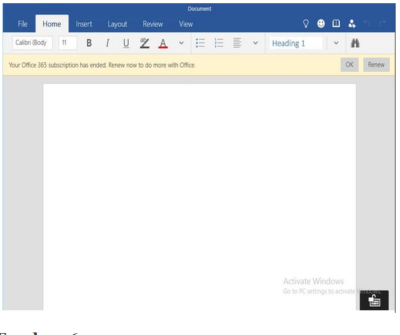
Microsoft is introducing two versions of Word 2016: a feature-rich desktop version and a lightweight, touch-optimized version. The desktop version looks and feels a lot like the previous version (Figure A), but Microsoft is introducing some new features, such as real-time co-authoring.

Figure A

Word 2016 Desktop Version

The touch-optimized version of Word (Figure B) is currently available only for use on the Windows 10 preview. It contains the essential features that users most commonly need to do their jobs, with a clean interface that’s ideal for touch screens, small screens, or for anyone who is intimidated by the desktop version’s exhaustive feature set.

Figure B

Word 2016 Touch-Optimized Version

2: Excel 2016

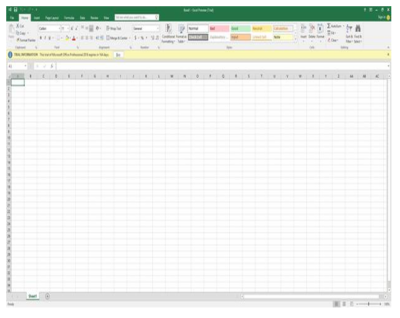
As is the case with Word, Microsoft is releasing two versions of Excel. The desktop version (Figure C) is much more feature rich and will likely be the best choice for hard-core Excel users. It includes new capabilities, such as business intelligence integrated directly into Excel and some data loss prevention features.

Figure C

Excel 2016 Desktop Version

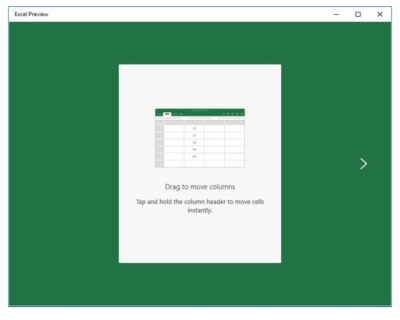
The touch-optimized version of Excel (Figure D) is similar to its Word counterpart, in that it’s designed to be lightweight and includes only the most commonly used features. Although more capable, this version of Excel reminds me a lot of the version that is included with Windows Phone 8.1.

Figure D

Excel 2016 Touch-Optimized Version

3: PowerPoint 2016

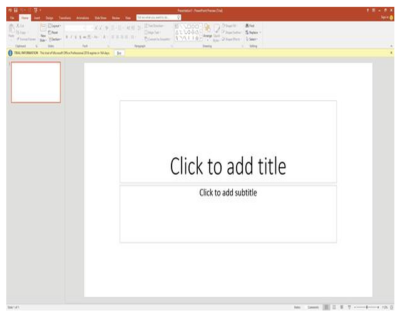
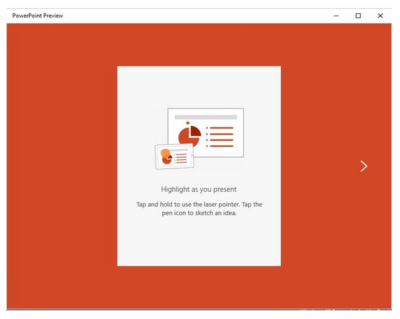
The PowerPoint 2016 preview doesn’t seem to have changed all that much from the previous version, either (Figure E). The most noticeable change to the interface is the addition of the Tell Me bar, a Cortana-like interface that will be shared by all of the Office 2016 applications. It allows users ask Office how to perform a particular task.

Figure E

PowerPoint 2016 Desktop Version

As with Word and Excel, Microsoft has also created a lighter weight, touch-optimized version of PowerPoint (Figure F).

Figure F

PowerPoint 2016 Touch-Optimized Version

4: OneNote 2016

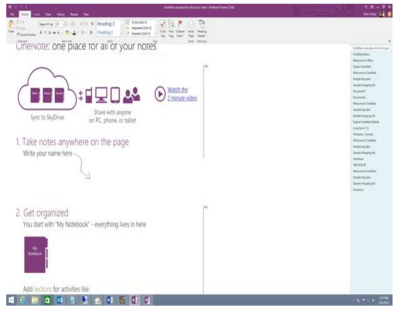
On the surface it is difficult to tell what, if anything is new in OneNote 2016 (Figure G), beyond the enhancements that exist for all the Office applications. Web searches for OneNote 2016 features have as yet failed to reveal anything significant. I admit that I don’t use OneNote often, so it is entirely possible that new features exist and I simply have not found them.

Figure G

OneNote 2016 Desktop Version

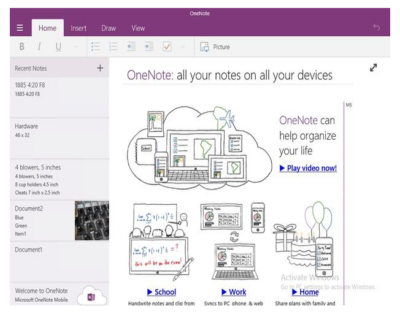
Although the desktop version of OneNote seems to be similar to OneNote 2013, the touch-optimized version (Figure H) has an intuitive interface that’s easy to use. The touch version is more full-featured than the version that was included with Windows Phone 8.1, but it doesn’t contain all the features of the desktop version.

Figure H

OneNote 2016 Touch-Optimized Version

5: Sway

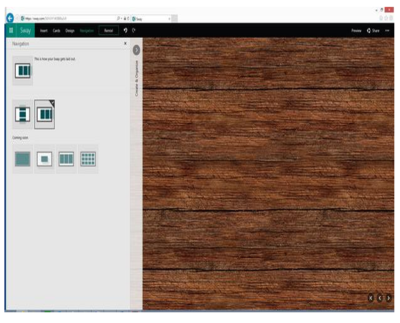
Microsoft PowerPoint has been around in one form or another for what seems like forever. During that time, it has become more refined, but it’s still basically just a slideshow tool. In Microsoft Office 2016, Microsoft is introducing Sway (Figure I) as a next-generation alternative to PowerPoint.

Figure I

Sway (Next Generation Alternative To PowerPoint)

There are two main differences between PowerPoint and Sway. First of all, PowerPoint is linear. A PowerPoint presentation has a first slide and it has a last slide and usually, a number of slides in between. In contrast, Sway is designed to be more organic and allow for more free-form presentations.

The other major difference between PowerPoint and Sway is that Sway is designed for Web content. A Sway presentation can include photos, YouTube videos, and items from Facebook, Twitter, OneDrive, etc. Some have argued that Sway is like OneNote because it aggregates information. However, OneNote is more of an organizational application, while Sway is designed for presentations.

Have questions?

Get help from Microsofts Cloud Solutions Partner!
Call us at: 856-745-9990

South Jersey Techies, LLC is a full Managed Web and Technology Services Company providing IT Services, Website Design ServicesServer SupportNetwork ConsultingInternet PhonesCloud Solutions Provider and much more. Contact for More Information.

To read this article in its entirety click here.
Upgrade to Windows Server 2012

10 Compelling Reasons to Upgrade to Windows Server 2012

Takeaway: Windows Server 2012 is generating a significant buzz among IT pros. Deb Shinder highlights several notable enhancements and new capabilities.

We’ve had a chance to play around a bit with the release preview of Windows Server 2012. Some have been put off by the interface-formerly-known-as-Metro, but with more emphasis on Server Core and the Minimal Server Interface, the UI is unlikely to be a “make it or break it” issue for most of those who are deciding whether to upgrade. More important are the big changes and new capabilities that make Server 2012 better able to handle your network’s workloads and needs. That’s what has many IT pros excited.

Here are 10 reasons to give serious consideration to upgrading to Windows Server 2012 sooner rather than later.

1: Freedom of interface choice

A Server Core installation provides security and performance advantages, but in the past, you had to make a commitment: If you installed Server Core, you were stuck in the “dark place” with only the command line as your interface. Windows Server 2012 changes all that. Now we have choices.

The truth that Microsoft realized is that the command line is great for some tasks and the graphical interface is preferable for others. Server 2012 makes the graphic user interface a “feature” — one that can be turned on and off at will. You do it through the Remove Roles Or Features option in Server Manager.

2: Server Manager

Speaking of Server Manager (Figure A), even many of those who dislike the new tile-based interface overall have admitted that the design’s implementation in the new Server Manager is excellent.

One of the nicest things about the new Server Manager is the multi-server capabilities, which makes it easy to deploy roles and features remotely to physical and virtual servers. It’s easy to create a server group — a collection of servers that can be managed together. The remote administration improvements let you provision servers without having to make an RDP connection.

3: SMB 3.0

The Server Message Block (SMB) protocol has been significantly improved in Windows Server 2012 and Windows 8. The new version of SMB supports new file server features, such as SMB transparent failover , SMB Scale Out, SMB Multichannel, SMB Direct, SMB encryption, VSS for SMB file sharing, SMB directory leasing, and SMB PowerShell. That’s a lot of bang for the buck. It works beautifully with Hyper-V, so that VHD files and virtual machine configuration files can be hosted on SMB 3.0 shares. A SQL system database can be stored on an SMB share, as well, with improvements to performance. For more details about what’s new in SMB 3.0, see this blog post.

4: Dynamic Access Control (DAC)

Even though some say Microsoft has shifted the focus away from security in recent years, it would be more accurate to say it has shifted the focus from separate security products to a more “baked in” approach of integrating security into every part of the operating system.

Dynamic Access Control is one such example, helping IT pros create more centralized security models for access to network resources by tagging sensitive data both manually and automatically, based on factors such as the file content or the creator. Then claims based access controls can be applied. Read more about DAC in my “First Look” article over on Windowsecurity.com.

5: Storage Spaces

Storage is a hot — and complex — topic in the IT world these days. Despite the idea that we’re all going to be storing everything in the public cloud one day, that day is a long way off (and for many organizations concerned about security and reliability, it may never happen). There are myriad solutions for storing data on your network in a way that provides better utilization of storage resources, centralized management, and better scalability, along with security and reliability. Storage area networks (SANs) and network attached storage (NAS) do that, but they can be expensive and difficult to set up.

Storage Spaces is a new feature in Server 2012 that lets you use inexpensive hard drives to create a storage pool, which can then be divided into spaces that are used like physical disks. They can include hot standby drives and use redundancy methods such as 2- or 3-way mirroring or parity. You can add new disks any time, and a space can be larger than the physical capacity of the pool. When you add new drives, the space automatically uses the extra capacity. Read more about Storage Spaces in this MSDN blog post.

6: Hyper-V Replica

Virtualization is the name of the game in the server world these days, and Hyper-V is Microsoft’s answer to VMware. Although the latter had a big head start, Microsoft’s virtualization platform has been working hard at catching up, and many IT pros now believe it has surpassed its rival in many key areas. With each iteration, the Windows hypervisor gets a little better, and Hyper-V in Windows Server 2012 brings a number of new features to the table. One of the most interesting is Hyper-V Replica.

This is a replication mechanism that will be a disaster recovery godsend to SMBs that may not be able to deploy complex and costly replication solutions. It logs changes to the disks in a VM and uses compression to save on bandwidth, replicating from a primary server to a replica server. You can store multiple snapshots of a VM on the replica server and then select the one you want to use. It works with both standalone hosts and clusters in any combination (standalone to standalone, cluster to cluster, standalone to cluster or cluster to standalone). To find out more about Hyper-V replica, see this TechNet article.

7: Improvements to VDI

Windows Terminal Services has come a long way, baby, since I first met it in Windows NT TS Edition. Renamed Remote Desktop Services, it has expanded to encompass much more than the ability to RDP into the desktop of a remote machine. Microsoft offered a centralized Virtual Desktop Infrastructure (VDI) solution in Windows Server 2008 R2, but it was still a little rough around the edges. Significant improvements have been made in Server 2012.

You no longer need a dedicated GPU graphics card in the server to use RemoteFX, which vastly improves the quality of graphics over RDP. Instead, you can use a virtualized GPU on standard server hardware. USB over RDP is much better, and the Fair Share feature can manage how CPU, memory, disk space, and bandwidth are allocated among users to thwart bandwidth hogs. Read more about Server 2012 VDI and RDP improvements here.

8: DirectAccess without the hassle factor

DirectAccess was designed to be Microsoft’s “VPN replacement,” a way to create a secure connection from client to corporate network without the performance drain and with a more transparent user experience than a traditional VPN. Not only do users not have to deal with making the VPN work, but administrators get more control over the machines, with the ability to manage them even before users log in. You apply group policy using the same tools you use to manage computers physically located on the corporate network.

So why hasn’t everyone been using DirectAccess with Server 2008 R2 instead of VPNs? One big obstacle was the dependency on IPv6. Plus, it couldn’t be virtualized. Those obstacles are gone now. In Windows Server 2012, DirectAccess works with IPv4 without having to fool with conversion technologies, and the server running DirectAccess at the network edge can now be a Hyper-V virtual machine. The Server 2012 version of DA is also easier to configure, thanks to the new wizard.

9: ReFS

Despite the many advantages NTFS offers over early FAT file systems, it’s been around since 1993, and Windows aficionados have been longing for a new file system for quite some time. Way back in 2004, we were eagerly looking forward to WinFS, but Vista disappointed us by not including it. Likewise, there was speculation early on that a new file system would be introduced with Windows 7, but it didn’t happen.

Windows Server 2012 brings us our long-awaited new file system, ReFS or the Resilient File System. It supports many of the same features as NTFS, although it leaves behind some others, perhaps most notably file compression, EFS, and disk quotas. In return, ReFS gives us data verification and auto correction, and it’s designed to work with Storage Spaces to create shrinkable/expandable logical storage pools. The new file system is all about maximum scalability, supporting up to 16 exabytes in practice. (This is the theoretical maximum in the NTFS specifications, but in the real world, it’s limited to 16 terabytes.) ReFS supports a theoretical limit of 256 zetabytes (more than 270 billion terabytes). That allows for a lot of scaling.

10: Simplified Licensing

Anyone who has worked with server licenses might say the very term “simplified licensing” is an oxymoron. But Microsoft really has listened to customers who are confused and frustrated by the complexity involved in finding the right edition and figuring out what it’s really going to cost. Windows Server 2012 is offered in only four editions: Datacenter, Standard, Essentials, and Foundation. The first two are licensed per-processor plus CAL, and the latter two (for small businesses) are licensed per-server with limits on the number of user accounts (15 for Foundation and 25 for Essentials).

To View Full Article Click Here

Microsoft Windows 7 Service Pack 1 released

Takeaway: On February 22, 2011, Microsoft released Service Pack 1 for Windows 7 to the general public. Should you download and install it?

As of February 22, 2011, Service Pack 1 for Windows 7 is available to the general public from the Microsoft Service Pack Center. Windows 7 SP1 includes previously released security, performance, and stability updates, plus some improvements to features and services.

Microsoft suggests that individuals just let the normal Windows update system handle installation of the service pack. However, if you’d like to accelerate the process you can download the file and install it manually. The install will take around 30 minutes and you will have to reboot the PC during the process.

Depending on what method is used to install the service pack, you will need anywhere from 750MB to 7400MB of available disk space storage to complete the installation procedure, so plan accordingly. If you have a pre-release version of SP1 installed, you will have to uninstall it before you install the latest version.

Also note that some antivirus software will prevent SP1 from being installed properly, so you may want to temporarily turn off your antivirus while the installation takes place

To view the original article in it’s entirety Click Here

L2TP VPN Connections Break as part of January 2022 Patch Tuesday

Update 1/28/2022: South Jersey Techies has released OOB updates to fix the Windows L2TP VPN connection issues.

Microsoft released Windows updates to fix security vulnerabilities and bugs as part of the January 2022 Patch Tuesday that came with fixes for six zero-day vulnerabilities and a total of 97 flaws.

These updates also included KB5009566 for Windows 11 and KB5009543 for Windows 10 2004, 20H1, and 21H1.

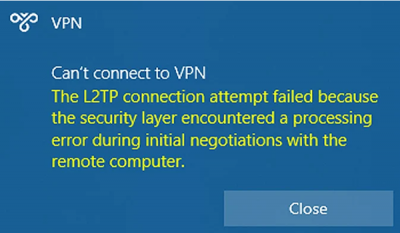
Problems are being reported rapidly from Windows 10 users and administrators who are trying to make L2TP VPN connections after installing the recent Windows 10 KB5009543 and Windows 11 KB5009566 cumulative updates and receiving the error below. L2TP VPN connections are being reported as broken when attempting to connect using the Windows VPN client by Windows users.

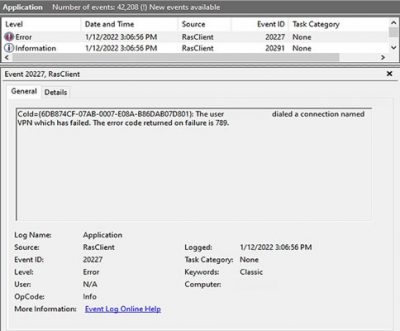
You will also receive an error code in the Event Log entries, code 789, stating that the connection to the VPN failed.

The bug is not affecting all VPN devices and seems only to be affecting users using the built-in Windows VPN client to make the connection. Some users have reported the bug affecting their Ubiquiti Site-to-Site VPN connections for those using the Windows VPN client. The bug also affects connections to SonicWall, Cisco Meraki, and WatchGuard Firewalls, with the latter’s client also affected by the bug.

How to fix the break?

Admins have been forced to remove the KB5009566 and KB5009543 updates, which immediately fixes the L2TP VPN connections on reboot.

However, you face the risk of removing all fixes for vulnerabilities patches released during the January 2022 Patch Tuesday when removing the update due to Microsoft’s bundling of all security updates in a single Windows cumulative update.

Weighing the risks of unpatched vulnerabilities versus the disruption caused by the inability to connect to VPN connections is something all Windows admins need to consider, carefully.

Microsoft’s January 2022 Patch Tuesday fixed numerous vulnerabilities in the Windows Internet Key Exchange (IKE) protocol (CVE-2022-21843, CVE-2022-21890, CVE-2022-21883, CVE-2022-21889, CVE-2022-21848, and CVE-2022-21849) and in the Windows Remote Access Connection Manager (CVE-2022-21914 and CVE-2022-21885) that could be causing the problems.

Unfortunately, there is no known fix or workaround for the L2TP VPN connection issues at this time.

If you have any questions, please email us at support@sjtechies.com or call us at (856) 745-9990.

Killer keyboard shortcuts to help you master Windows

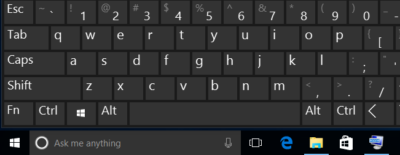
These Windows keyboard shortcuts help you navigate your PC faster, master documents, wrangle various virtual desktops, and shut down and secure a computer, using just a few keys.windows-keyboardDespite notable advancements in speech-recognition technology and voice input, and the popularity of tablets, the humble PC continues to be the workhorse device of choice for many workers around the world. And whether you’re an office-bound professional slouched behind a desktop PC, or a globetrotting executives armed with the latest ultrabook, the “physical” hardware keyboard continues to play a crucial role in productivity.The last thing you want in the heat of the moment is to fumble around for a mouse or have to take multiple steps to complete a task that could be done with a quick keyboard shortcut. Of course, learning and remembering such shortcuts can be hard work, and you’ll need to take some time to find the appropriate shortcuts for you.We’re here to assist. This list of valuable Windows keyboard shortcuts will help you work smarter and faster.

Keyboard shortcuts for the Windows surfer

windows-surfer

If you hope to master Windows keyboard shortcuts, you should start with the Windows desktop. The following shortcuts let you toggle between app windows and quickly resize them without having to reach for a mouse or align your apps.

  • Windows key (a.k.a., “Winkey“) + D.  Minimize all app windows and jump straight to the desktop. Hit the shortcut again to bring all apps back to the foreground.
  • Winkey + Comma. Take a quick peek at your desktop, and then release the keys to snap all apps back to the foreground.
  • Winkey + Left Arrow, or Winkey + Right Arrow. Dock your app windows to the left or right of the screen.
  • Winkey + Down Arrow, or Winkey + Up Arrow. Maximize or minimize a selected app. Or dock your app windows to the top or bottom of your display, when app windows are already docked to the left or right.
  • F11 – Toggle an active window in and out of full screen mode.
  • Ctrl + Esc – Bring up your Start menu. (This is particularly helpful if you use a keyboard that doesn’t have a Winkey.)

Windows keyboard shortcuts for the Kung Fu typer

These useful shortcuts help zoom the cursor around your page much quicker than if you use a mouse or trackpad.

  • Ctrl + Right Arrow, or Ctrl + Left Arrow. Move the cursor one word to the right or left.
  • Ctrl + Down Arrow, or Ctrl + Up Arrow. Move the cursor to the start or end of the next or previous paragraph.
  • Ctrl + Z, or Ctrl + Y. Undo or redo almost any action, as long as the app supports the feature.

Windows keyboard shortcuts for virtual desktop Jujutsu

Long a staple feature in Linux and the Mac, Microsoft finally officially incorporated virtual desktops into its Windows 10 OS. The indispensable feature lets you create additional desktops to better manage multiple app windows.

  • Winkey + Ctrl + D, or Winkey + Ctrl + F4. Create or close a virtual desktop.
  • Winkey + Ctrl + Left Arrow, or Winkey + Ctrl +Right Arrow. Toggle through your virtual desktops.
  • Winkey + Tab. Display the “Task View” interface for an overview of all virtual desktops. You can use the Arrow keys to toggle through desktops if you also hit Tab when in this mode. Hit Enter to jump to a selected desktop.

Windows keyboard shortcuts for the browser ninja

You’ve probably used a web browser for as long as you’ve had a computer, but do you take full advantage of keyboard shortcuts for browser navigation? These browser shortcuts all work the in latest versions of Internet Explorer, Microsoft Edge, Mozilla Firefox and Google Chrome.

  • Alt + D. Put the cursor into the browser’s address bar.
  • Ctrl + W, or Ctrl + T. Close or open a new browser tab.
  • Ctrl + Shift + T. Reopen the last browser tab you closed. (This comes in handy when if you hit Ctrl + W too quickly.)
  • Ctrl + Plus sign, or Ctrl + Minus sign. Zoom in and out on a web page. Reset the zoom level with Ctrl + 0.
  • Ctrl + Tab, or Ctrl + Shift + Tab. Toggle to the next browser tab from left to right, or from right to left.
  • Alt + Right Arrow, or Alt + Left Arrow. Browse forward or backward through recently visited websites. These shortcuts perform the same function as a browser’sForward and Back buttons.

Windows keyboard shortcuts for locking up and shutting down

This guide wouldn’t be complete without some shortcuts that help you shut down your PC and then lock things up.

  • Winkey + L. Immediately lock your PC.
  • Ctrl + Shift + Esc. Open the Task Manager to monitor app or forcibly shut down frozen programs.
  • Alt + F4. Close an active app. Using this shortcut key when your desktop is at the forefront invokes the “Shut Down Windows” prompt.

Have questions?

Get answers from Microsofts Cloud Solutions Partner!
Call us at: 856-745-9990 or visit: https://southjerseytechies.net/

South Jersey Techies, LL C is a full Managed Web and Technology Services Company providing IT Services, Website Design ServicesServer SupportNetwork ConsultingInternet PhonesCloud Solutions Provider and much more. Contact for More Information.

To read this article in its entirety click here.
CALL US NOW!